
Cephalocereus columna-trajani
Cephalocereus columna-trajani
Description
Growing requirements
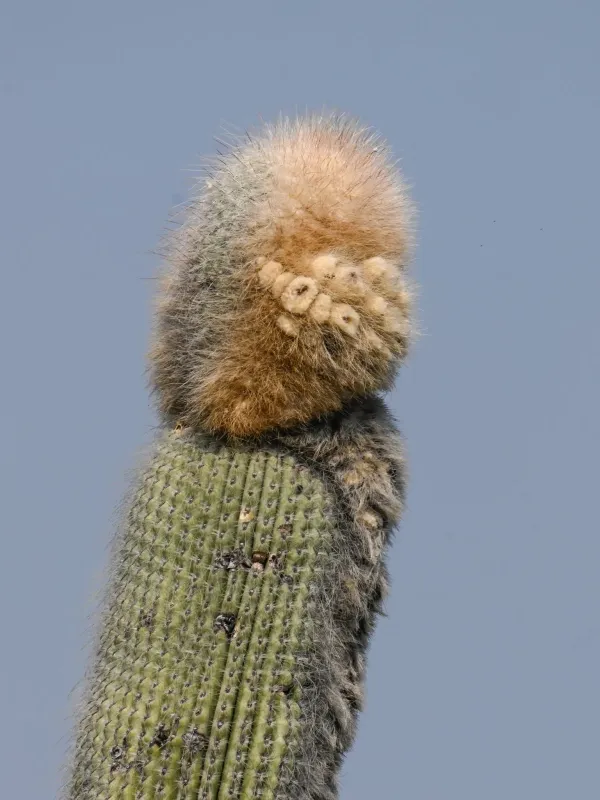
Cephalocereus columna-trajani is an impressive tree-like cactus belonging to the Cactaceae family. In its natural habitat, the plant can reach heights of up to 6 meters, featuring robust, columnar stems covered in dense white hairs and sharp spines.
Native to Mexico, this species thrives in hot, arid conditions on limestone-based soils. The plant requires intense sunlight, which is essential for maintaining a compact growth habit and developing the characteristic protective hairs that shield the epidermis from intense heat.
For successful cultivation, a well-draining mineral substrate is required. A mixture of loamy soil, coarse sand, and gravel is ideal to ensure rapid drainage and prevent water stagnation around the root system.
The temperature should be maintained between 20 and 30 degrees Celsius during the active growing season. In winter, the cactus requires a dormancy period with cooler temperatures (10–15 degrees Celsius) and minimal watering to simulate its natural dry season.
Watering should be moderate and performed only after the substrate has dried out completely. Overwatering is the most common cause of root rot, which is often fatal for this slow-growing succulent.
Main diseases and pests
The most significant pests affecting this culture are root mealybugs and spider mites. These pests thrive in dry environments with poor air circulation, often hiding deep within the dense hair covering.
To manage pest infestations, the application of systemic insecticides or acaricides is recommended. Regular inspection of the plant's surface is vital to catch infestations early before they cause significant damage.
Fungal and bacterial rots are primary health threats, usually triggered by improper watering practices or high humidity. Preventive measures include using sterilized soil and ensuring adequate drainage at all times.
Mechanical damage to the cactus skin should be treated immediately with wood charcoal or specialized fungicides. This step prevents the entry of pathogens into the succulent tissues, reducing the risk of necrosis.
Adequate air movement is essential for plant health. Proper ventilation prevents the buildup of humidity around the stems, which is crucial for maintaining the resilience of the plant against common diseases.