
Cephalocereus apicicephalium
Cephalocereus apicicephalium
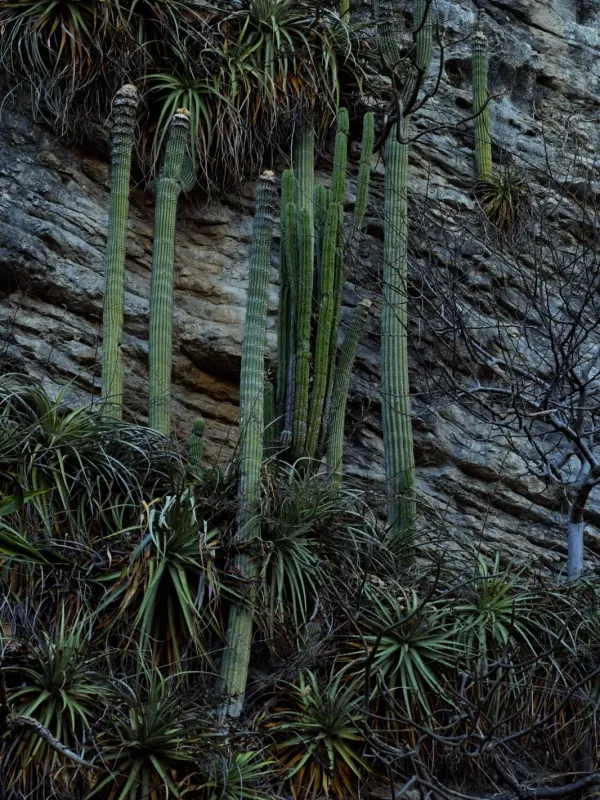
Description
Growing requirements
Cephalocereus apicicephalium belongs to the Cactaceae family. This columnar cactus is native to Mexico, specifically inhabiting arid regions where it has adapted to intense sunlight and limited precipitation.
Botanically, this species is recognized for its dense, woolly appearance at the apex of the stem, a feature that provides insulation and protection against harsh solar rays. It grows slowly, forming impressive, sturdy structures over time.
Cultivation requires high levels of light exposure. Placing the plant in a sunny, south-facing location or an appropriately illuminated greenhouse is critical for maintaining its healthy growth habit and coloration.
The growing medium must be highly porous. A typical potting mix should contain at least 50% inorganic material, such as pumice, perlite, or gravel, to ensure optimal drainage and prevent root asphyxiation.
Management involves a strict watering schedule: water only when the substrate is completely dry. During the winter, the plant enters a dormant phase and should be kept almost entirely dry to prevent physiological stress.
Main diseases and pests
The primary threat to Cephalocereus apicicephalium is root rot, usually caused by overwatering or soil that remains damp for too long. Once internal decay begins, it is often difficult to reverse.
Mealybugs are the most persistent pest for this species. They hide in the crevices of the ribs or underneath the woolly cover, making manual removal or chemical treatment quite challenging.
Scale insects can also attach themselves to the surface of the stem, causing localized tissue damage and creating entry points for opportunistic fungal or bacterial infections.
Improper ventilation in indoor conditions can lead to the proliferation of spider mites, especially during hot, dry summer periods. High humidity is not recommended, but stagnant air should be avoided.
Control strategies involve using systemic pesticides designed for succulents and maintaining impeccable sanitation standards within the growing environment to minimize pest outbreaks.