
Mandevilla sanderi
Mandevilla sanderi (Hemsl.) Woodson
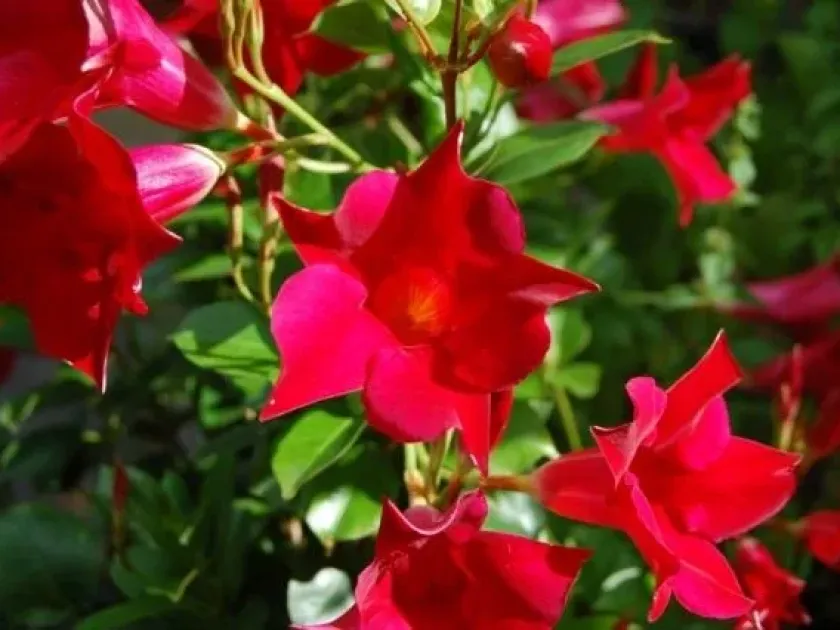
Description
Growing requirements
Mandevilla sanderi, belonging to the Apocynaceae family, is an evergreen perennial vine native to the mountain regions of Brazil. This plant is widely recognized in horticulture for its vigorous climbing habit and large, showy flowers.
The plant thrives in warm climates and requires consistent temperatures between 20 and 25 degrees Celsius. Due to its tropical origin, it is sensitive to frost and must be protected in containers during colder seasons.
Proper cultivation requires a well-draining, nutrient-rich soil mixture. A slightly acidic pH level is optimal for healthy root development and efficient nutrient uptake throughout the growing season.
Mandevilla requires bright, indirect sunlight to flourish; direct, harsh sun can scorch the foliage, while inadequate light inhibits flowering. Providing structural support, such as trellises, is essential for its vertical growth.
Watering should be frequent during the active growth phase, ensuring the soil remains moist but never waterlogged. During the winter dormancy period, the irrigation frequency should be significantly reduced.
Main diseases and pests
The most common pests affecting Mandevilla sanderi are spider mites, which thrive in dry indoor conditions, and mealybugs that cluster on stems and leaf nodes.
Root rot is a major threat caused by overwatering and poor soil aeration. This condition can lead to rapid wilting and the death of the plant if not addressed early.
Whiteflies are another significant pest that can quickly colonize the plant during summer months when moved outdoors, leading to plant stress and secondary infections.
Pest management involves the application of appropriate systemic insecticides and maintaining higher ambient humidity to discourage mites.
Preventive care, such as regular inspection of leaf undersides and ensuring adequate ventilation, is crucial for maintaining plant health and vigor.