
Mandevilla splendens
Mandevilla splendens (Hook. f.) Woodson
Description
Growing requirements
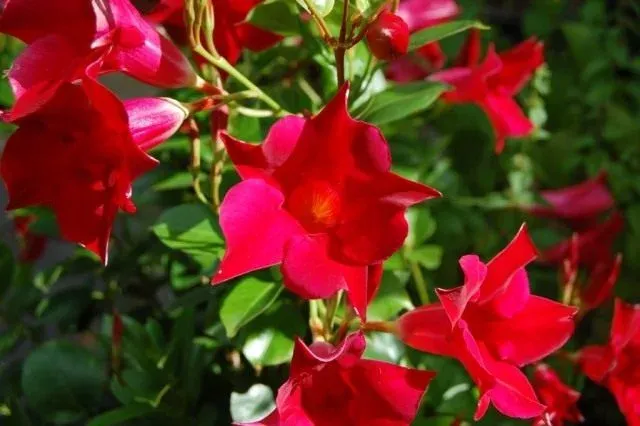
Mandevilla splendens is a vigorous, evergreen, woody-stemmed vine belonging to the Apocynaceae family. Native to the tropical forests of Brazil, this species is highly valued in horticulture for its spectacular, large trumpet-shaped flowers that bloom in clusters.
The plant thrives in warm tropical conditions. For optimal growth, day temperatures should range from 22°C to 28°C, while night temperatures should not drop below 15°C. Exposure to cold drafts or low temperatures can cause leaf drop and stunt overall development.
Bright, indirect light is essential for the healthy growth of Mandevilla. While the plant can tolerate some morning sun, intense midday rays should be avoided to prevent foliar scorching. Proper light exposure is the primary driver of flower bud formation.
The growing medium must be well-draining, rich in organic matter, and slightly acidic. A mix of peat moss, pine bark, and perlite provides the necessary structure and aeration. Overly compact soil will inevitably lead to root hypoxia and fungal proliferation.
Watering requirements are moderate but consistent. The substrate should be allowed to dry slightly at the top level between waterings. Use lukewarm, chlorine-free water to avoid mineral buildup and temperature shock to the root system.
Main diseases and pests
Mandevilla is susceptible to various pests, with spider mites being the most common during periods of low humidity. These tiny pests feed on cell sap, causing fine yellow stippling on the foliage and eventually leaf senescence.
Mealybugs are another frequent threat, often congregating in leaf axils and along stems. Their cottony white deposits are easily visible, and they can severely weaken the plant if left untreated, leading to stunted shoots.
Root rot caused by Rhizoctonia or Pythium species is the most significant disease threat to Mandevilla. This usually occurs due to poor drainage or excessive soil moisture, causing the base of the stem to turn brown and mushy.
Management of pest outbreaks involves regular inspection and the use of integrated pest management practices. Horticultural oils or insecticidal soaps can be effective against soft-bodied insects if applied thoroughly to both leaf surfaces.
To prevent disease, ensuring proper air circulation is paramount. Avoid overcrowding plants in the nursery or indoor space, and always sanitize tools between pruning sessions to prevent cross-contamination of potential pathogens.