
Mandevilla boliviensis
Mandevilla boliviensis (Hook. f.) Woodson
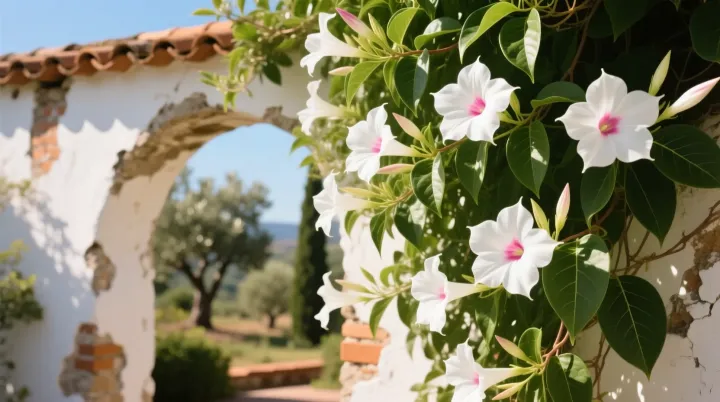
Description
Growing requirements
Mandevilla boliviensis is a vigorous, woody-stemmed evergreen vine belonging to the Apocynaceae family. Native to the tropical regions of Bolivia and Costa Rica, it is highly valued for its pure white, fragrant trumpet-shaped flowers.
The plant thrives in warm tropical conditions, ideally between 20°C and 25°C. It is strictly intolerant to frost and requires consistent warmth to maintain its lush foliage and continuous blooming cycle throughout the season.
A well-draining, nutrient-rich potting medium is essential. A mixture composed of peat moss, perlite, and high-quality potting soil allows for adequate aeration while retaining enough moisture for healthy root development.
Bright, indirect light is necessary for optimal growth. While the plant loves the sun, intense direct midday exposure can scorch the leaves, so placing it in a bright spot with morning sun is generally recommended.
Consistent watering during the growing season is vital. However, during the dormant winter period, the plant should be kept drier to prevent root rot, as the growth activity slows down significantly.
Main diseases and pests
Common pests that frequently attack Mandevilla boliviensis include spider mites, mealybugs, and scale insects. Regular inspection of the underside of leaves is necessary to catch infestations early.
Fungal diseases are typically a result of overwatering or inadequate air circulation. Root rot is a common issue that can be prevented by ensuring pots have proper drainage holes and using sterile soil.
Yellowing leaves often indicate either moisture stress, nutrient deficiency, or a sudden change in environmental conditions. It is important to avoid cold drafts to keep the plant vigorous.
In cases of severe pest infestation, the use of systemic insecticides or insecticidal soaps is required. Always follow manufacturer instructions to avoid damaging the plant's delicate tissues.
Caution must be exercised during pruning or repotting, as all parts of the plant contain a milky sap that can cause irritation to the skin or eyes. Always wear gloves when handling the plant.