
Mandevilla hybrid
Mandevilla boliviensis (Hook. f.) Woodson x Mandevilla sanderi (Hemsl.) Woodson
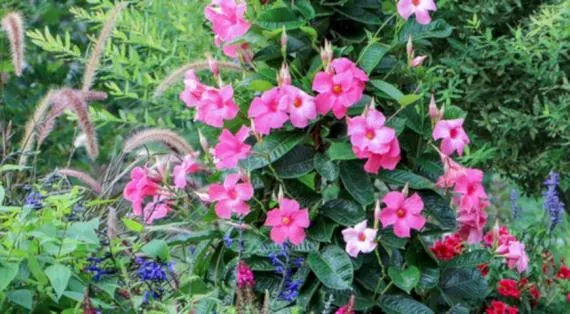
Description
Growing requirements
Mandevilla hybrid is a member of the Apocynaceae family, representing a group of vigorous vining plants derived from species native to the tropical regions of Central and South America. These plants are widely valued for their large, trumpet-shaped flowers.
The crop requires bright, indirect light to thrive and bloom. While it enjoys a warm environment, direct midday sun can be detrimental to the foliage, necessitating a placement that offers protection from intense heat while ensuring sufficient luminosity.
For optimal development, temperatures should remain between 20°C and 25°C during the growing season. During the dormant period, maintaining a cooler environment around 15°C helps the plant prepare for the next flowering cycle.
Soil requirements focus on excellent drainage and aeration. A mixture containing peat, pine bark, perlite, and high-quality potting soil provides the necessary structure to prevent compaction and ensure that the root system remains healthy.
Watering must be performed with precision; the growing medium should be kept consistently moist but never waterlogged. Overwatering is the most common error in cultivation, as it quickly leads to the development of anaerobic conditions around the roots.
Main diseases and pests
Common pests affecting Mandevilla include spider mites, mealybugs, and aphids. These insects tend to colonize the underside of leaves and young stems, extracting vital sap and causing stunted or deformed growth in the plant.
Diseases are typically associated with moisture management. Root rot caused by fungal pathogens is the most prevalent issue, often triggered by poorly drained soil or excessively cold and wet conditions during the winter months.
Effective pest control strategies involve the prompt application of horticultural oils or systemic insecticides when infestation is detected. Maintaining high environmental hygiene around the plant significantly reduces the risk of re-infestation.
To prevent disease outbreaks, it is essential to ensure proper ventilation around the foliage and to use sterilized tools when performing pruning. Removing dead or yellowing leaves also helps in maintaining overall plant vigor.
Consistent monitoring and adjusting the care routine based on seasonal changes are the best defenses. Providing balanced nutrients during the growth stage strengthens the plant, making it more resilient to potential environmental stressors.