
West Wyalong wattle
Acacia cardiophylla A. Cunn. ex Benth.
Description
Growing requirements
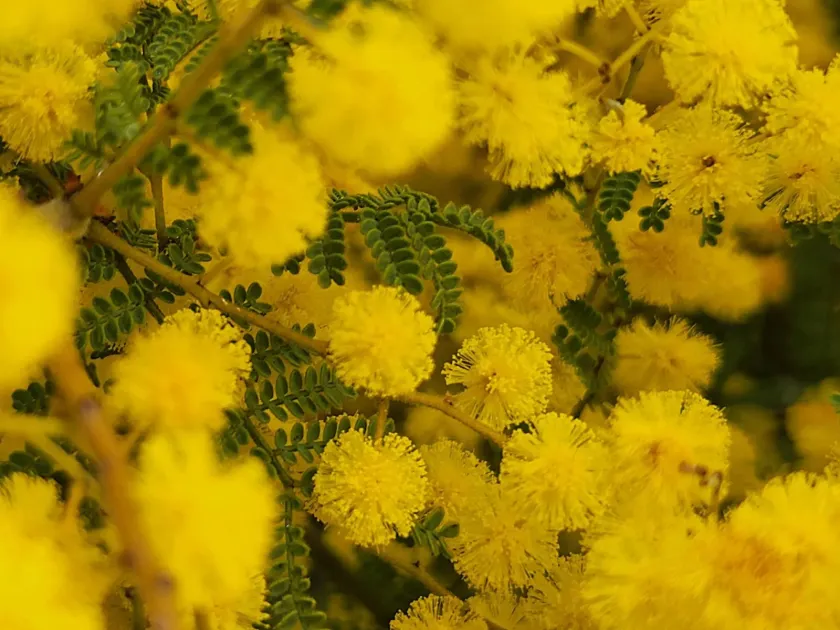
The West Wyalong wattle (Acacia cardiophylla) is a member of the Fabaceae family. Native to New South Wales, Australia, this evergreen shrub is widely recognized for its feathery foliage and brilliant, golden-yellow flower clusters that appear in early spring.
This species thrives in warm, temperate climates and requires plenty of direct sunlight to reach its full potential. It is sensitive to severe frost, so gardeners in colder zones often treat it as a container plant to be moved indoors during winter months.
Cultivation requires well-draining, slightly acidic to neutral soils. Being a drought-tolerant plant once established, it is excellent for xeriscaping, provided the soil structure prevents waterlogging, which is detrimental to the plant's roots.
Watering should be consistent during the first year of growth to establish a strong root system. Once mature, the shrub requires minimal intervention, though occasional deep watering during extended heatwaves will keep the plant looking vibrant.
Pruning is essential for maintaining a compact shape and encouraging a denser canopy. It is recommended to prune the plant immediately after the flowering cycle to avoid cutting off the buds intended for the next season.
Main diseases and pests
Pests such as mealybugs and scale insects are common enemies of Acacia cardiophylla. These pests typically congregate on the undersides of leaves and on young stems, requiring manual removal or systemic insecticides.
Root rot caused by fungal pathogens remains a primary threat, particularly in heavy or poorly drained soils. Improving soil aeration and strictly controlling irrigation frequency are the most effective preventive measures.
Iron deficiency, or chlorosis, often manifests as yellowing foliage. This can be corrected by applying iron chelate or ensuring the soil pH remains within the optimal range of 6.0 to 7.0 to facilitate nutrient uptake.
Sooty mold can develop as a secondary problem following aphid infestations. By managing the aphid populations early with neem oil or insecticidal soap, you can prevent the growth of the fungus on the leaves.
Regular sanitation, including the removal of dead or crossing branches, prevents the buildup of humidity and reduces the likelihood of foliage-related fungal diseases throughout the growing season.