
Green wattle
Acacia decurrens (J. C. Wendl.) Willd.
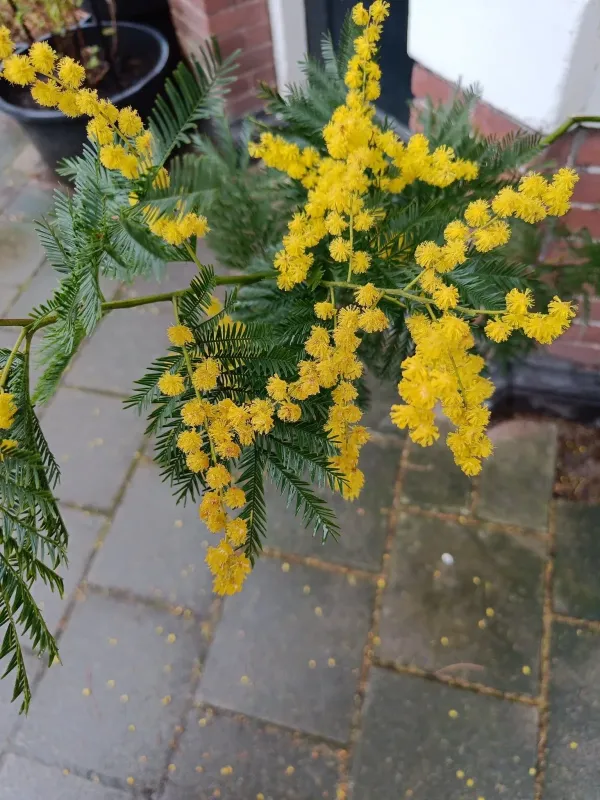
Description
Sowing dates
Propagation of Acacia decurrens is primarily achieved through seeds. To ensure successful germination, the seeds require scarification or treatment with near-boiling water to soften the hard seed coat.
Sowing should take place in spring, ensuring the soil temperature is high enough to support rapid germination and healthy early development of the seedlings.
Seeds should be sown in a well-draining potting mix at a shallow depth of about 1 to 2 centimeters. Maintaining consistent soil moisture is crucial during the initial stages of germination.
Once seedlings develop, they should be transplanted into individual containers. This prevents root competition and allows for better monitoring of each plant's growth and overall health.
Transplanting into the final location should be done carefully to keep the root ball intact, as the species can be sensitive to root disturbance when transferred into open soil.
Growing requirements
As a member of the Fabaceae family, the green wattle thrives in full sun exposure. It requires adequate light to maintain its characteristic dense foliage and healthy structural development.
The soil must be well-drained and slightly acidic to neutral. While the plant is adaptable to various soil types, it performs best in sandy or loamy soils that do not retain excess water.
Climate is a significant factor in cultivation. While it can handle mild frost, the species is essentially heat-loving and performs poorly in prolonged freezing conditions or high-wind areas.
Watering requirements are moderate. Once established, the green wattle is highly drought-tolerant, making it a suitable choice for landscapes with limited irrigation resources.
Fertilization is generally unnecessary if the soil is fertile. However, in poor soils, a low-phosphorus, slow-release fertilizer can be used to support growth during the peak season.
Main diseases and pests
Common pests affecting Acacia decurrens include aphids and spider mites. These sap-sucking insects can severely stunt the growth of young plants if left uncontrolled.
Root rot, caused by various fungal pathogens, is the most common disease associated with overwatering or poorly drained soil conditions, often leading to rapid decline.
Powdery mildew may occur in stagnant, humid environments. Improving airflow around the foliage and avoiding overhead irrigation can significantly reduce the risk of this infection.
Iron deficiency, or chlorosis, is common in alkaline soils, appearing as yellowing of leaves with green veins. Correcting soil pH or applying chelated iron supplements is recommended.
Integrated pest management, including monitoring and biological control, is highly effective in maintaining the health of wattle plantations and ornamental specimens.