
Acacia farnesiana
Acacia farnesiana (L.) Willd.
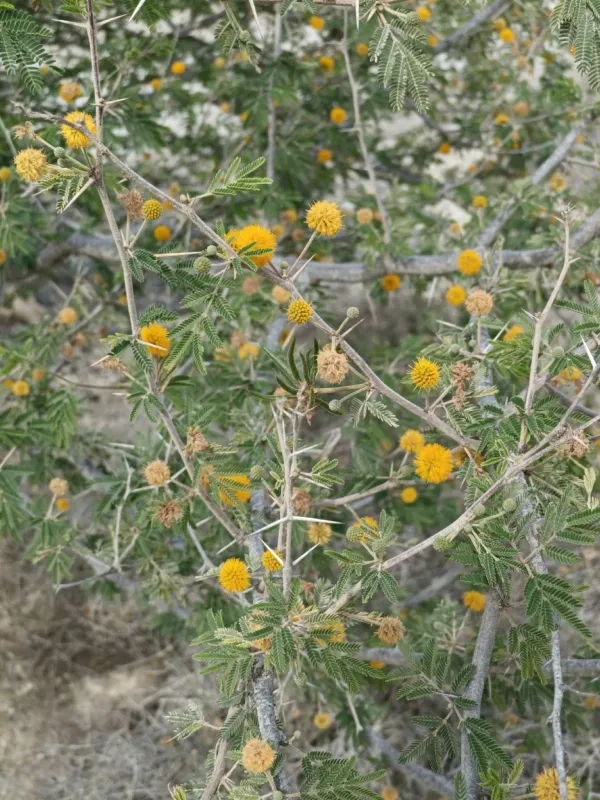
Description
Growing requirements
Acacia farnesiana (Vachellia farnesiana) is a perennial shrub or small tree belonging to the Fabaceae family. This plant is known for its high adaptability to various soil types, including rocky and nutrient-poor substrates, although it thrives best in well-drained soils.
Native to the tropical and subtropical regions of the Americas, this crop demonstrates significant drought tolerance. It does not tolerate prolonged freezing temperatures, making an optimal growth temperature range of +20 to +30 degrees Celsius essential.
Botanically, the species is characterized by stipular spines and bipinnate leaves that may shed under conditions of severe drought. The plant is heliophilic, requiring full sun exposure to ensure prolific blooming and fruit development.
The primary economic use of this culture is in the perfume industry, where its highly fragrant flowers are harvested for essential oils. Additionally, the plant is utilized in agroforestry for soil stabilization and as a natural barrier in hedging due to its extensive root system.
Agronomic practices include regular pruning to shape the crown and stimulate the development of flower buds. The crop responds well to organic fertilization during the growing season and requires moderate watering primarily during its early stages of establishment.
Main diseases and pests
Common pests affecting this crop include various species of aphids and mealybugs, which damage young shoots and inflorescences, thereby reducing essential oil yields.
Under conditions of excessive soil moisture, the plant may suffer from fungal infections that lead to root rot. Providing effective drainage is a critical measure for the prevention of such pathologies.
Nematodes also pose a significant threat when the crop is cultivated in sandy soils, as they damage the root system and inhibit the uptake of essential microelements.
Pest management relies on an integrated approach, utilizing biological control agents and timely sanitary pruning of infected branches to maintain tree health.
In commercial plantation settings, maintaining adequate spacing between individual plants is necessary to promote air circulation within the canopy and minimize the spread of diseases.
Harvesting
Harvesting the flowers of Acacia farnesiana is a labor-intensive process, as the inflorescences must be collected during the precise period of their peak aromatic activity.
Harvesting usually takes place in the early morning hours, when the concentration of essential oils in the petals reaches its maximum level before evaporation under the intense sun.
Flowers are picked by hand to avoid damaging the delicate plant tissues and to ensure the preservation of raw material quality for subsequent solvent extraction.
Following collection, the inflorescences are immediately transported for processing, as they lose their volatile aromatic compounds rapidly if stored incorrectly.
Proper management of the harvesting cycle is crucial for maximizing the economic viability of the plantation and ensuring the high quality of the final perfume product.