
Acacia auriculiformis
Acacia auriculiformis A. Cunn. ex Benth.
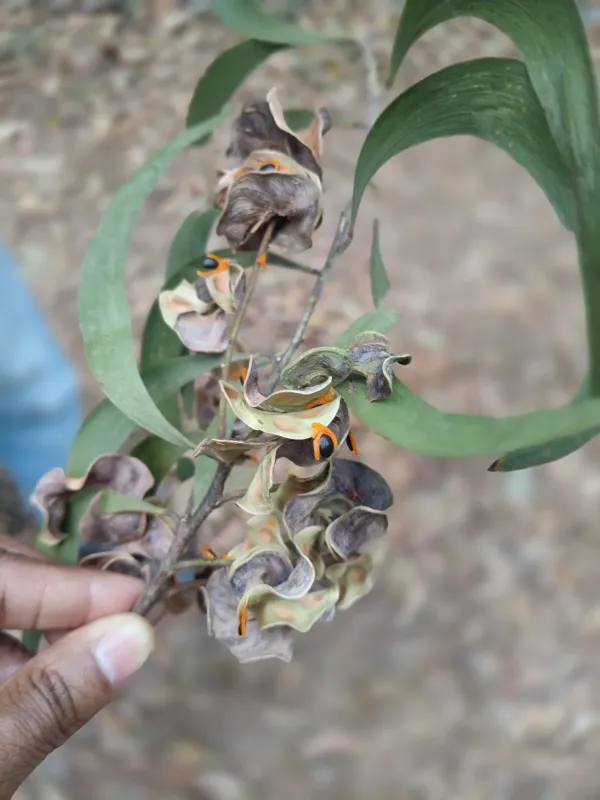
Description
Sowing dates
Propagation of Acacia auriculiformis is primarily achieved through seeds, which require pre-sowing treatment like scarification or hot water soaking.
Seeds are typically sown in nursery containers to ensure high germination rates and protection of seedlings during their delicate early stage.
Transplanting to the field is ideally timed at the beginning of the rainy season to allow the root system to establish without additional water stress.
For industrial plantations, spacing is generally set at 3x3 meters to encourage vertical growth and produce high-quality straight timber.
Direct seeding in prepared soil furrows is an alternative method, provided that weed control is managed diligently to prevent competition.
Growing requirements
Belonging to the Fabaceae family, this species is renowned for its rapid growth rate and remarkable adaptability to diverse tropical climates.
The tree thrives in poor, sandy, and infertile soils, making it an excellent candidate for rehabilitating degraded land and stabilizing sandy coastal areas.
It prefers full sunlight and is highly intolerant of shade, which is a critical factor when designing plantation layouts and thinning strategies.
While tolerant of a wide range of moisture conditions, it grows best in areas with high annual rainfall but exhibits significant drought tolerance.
Soil nitrogen enrichment occurs through its root nodules, which effectively improve soil fertility for future agricultural cycles or forest development.
Yield
Acacia auriculiformis is a high-yield species capable of producing significant biomass within a relatively short rotation cycle of 8 to 12 years.
Yields can average between 15 and 25 cubic meters per hectare per year, depending on soil depth, climate, and initial plantation density.
The timber is widely used for pulp and paper production due to its favorable fiber characteristics and density, which ensure quality end products.
The wood serves as an excellent source of charcoal, known for its high calorific value and slow, steady burning properties in industrial applications.
Additional commercial value is derived from the bark, which contains tannins used in the leather industry and various traditional medical preparations.
Main diseases and pests
The primary threats to Acacia auriculiformis include fungal pathogens such as Ganoderma root rot, which can lead to tree decline.
Wood-boring insects can compromise the structural integrity of the timber, significantly reducing the market value of the harvested logs.
Maintaining proper tree spacing is essential to ensure adequate airflow, which helps mitigate the spread of humidity-related diseases within the forest.
Effective plantation management involves regular monitoring for signs of infestation and prompt removal of dead or dying trees to prevent outbreaks.
In the early stages, competition from aggressive weed species is the most significant threat to the survival and growth of new seedlings.
Harvesting
Harvesting is typically conducted at the end of the rotation period when the wood reaches the required diameter for industrial processing.
Methods involve clear-felling or selective thinning, depending on the management objective, and the logs are then bucked to specific commercial dimensions.
A unique advantage of this species is its ability to resprout from the stump, which facilitates natural regeneration and reduces the need for replanting.
The regrowth period for coppiced stands is often shorter than the initial planting cycle, allowing for higher efficiency in long-term forest management.
Log transport and post-harvest site preparation are critical steps to ensure that the regeneration phase begins promptly and successfully.