
Acacia holosericea
Acacia holosericea A. Cunn. ex G. Don
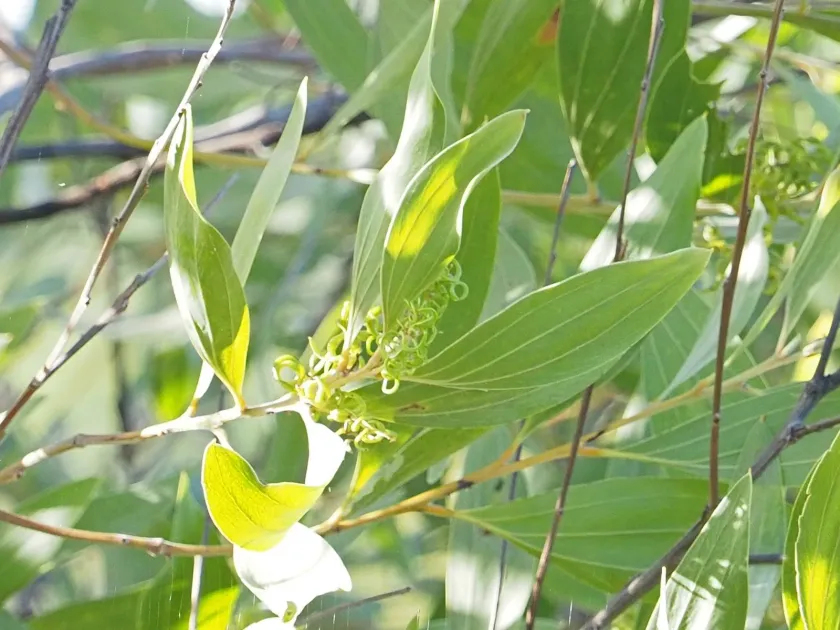
Description
Sowing dates
The propagation of Acacia holosericea begins with seed treatment, specifically mechanical scarification or boiling water immersion, to break the seed coat dormancy.
In its native range, seeds are typically sown at the onset of the rainy season, allowing the seedlings to utilize sufficient moisture for rapid early development.
In nursery settings, seeds are planted in well-draining containers to promote robust root growth before they are transplanted into their permanent field locations.
Planting depth should be kept shallow, between 1 to 2 centimeters, ensuring that the seedling can emerge without exhausting its nutritional reserves.
Spacing depends on the intended end-use, with wider intervals recommended for windbreaks and closer spacing used for biomass production or erosion control projects.
Growing requirements
Acacia holosericea is a member of the Fabaceae family, highly valued for its exceptional ability to thrive in harsh, nutrient-poor, and degraded environments.
This species prefers well-drained, sandy, or stony soils and is remarkably resilient to extreme drought conditions, making it ideal for arid region agriculture.
Full solar exposure is critical for this species, as it requires high light intensity to maximize its photosynthetic potential and overall biomass production rates.
As a nitrogen-fixing tree, it forms symbiotic relationships with soil bacteria, which improves soil fertility and benefits the surrounding vegetation in polyculture systems.
The climate requirement is strictly tropical or subtropical; the species is highly sensitive to frost, which can cause significant damage to its vegetative tissues.
Yield
The yield of biomass is impressive for this species, providing significant quantities of woody material that serves as a sustainable source of fuel and timber.
In agroforestry systems, it produces a large volume of seeds, which are highly effective for direct seeding programs aimed at restoring degraded land surfaces.
The foliage serves as a vital forage resource, providing a high-protein supplement for livestock during periods when other feed sources are scarce or unavailable.
Productivity is largely determined by site quality and initial management efforts, though the tree remains productive even with minimal external inputs after establishment.
Sustainable yield management involves periodic thinning or pruning, which encourages denser branching and ensures a continuous supply of fodder and woody biomass.
Main diseases and pests
Key threats include various seed-boring insects and beetles that can significantly reduce the viability of seed harvests if left unmanaged during the ripening period.
Root rot and fungal pathogens pose risks primarily in areas with poor drainage or waterlogging, which prevent the root system from accessing necessary oxygen.
Sap-sucking pests like aphids or scale insects may colonize young shoots, potentially stunting tree growth and increasing vulnerability to environmental stress.
Prevention relies on selecting optimal planting sites with excellent drainage and monitoring tree health to detect early signs of pest or disease infestations.
Integrated pest management strategies should be prioritized to keep the plantation healthy without relying heavily on intensive chemical interventions.
Harvesting
Seed harvesting is conducted when the pods turn brown and dry, indicating that the seeds have reached physiological maturity and are ready for extraction.
For woody biomass, selective harvesting allows for the sustainable extraction of fuel wood while maintaining the health and longevity of the remaining canopy.
Foliage is harvested by pruning branches, a technique that not only provides feed but also promotes compensatory growth, resulting in a thicker, bushier crown.
Proper harvesting tools must be sharp to ensure clean cuts, minimizing the risk of infection at the wound sites and preventing structural damage to the tree.
Post-harvest handling involves drying the collected seeds in well-ventilated areas to prevent fungal development before long-term storage or immediate sowing.