
Acacia mangium
Acacia mangium Willd.
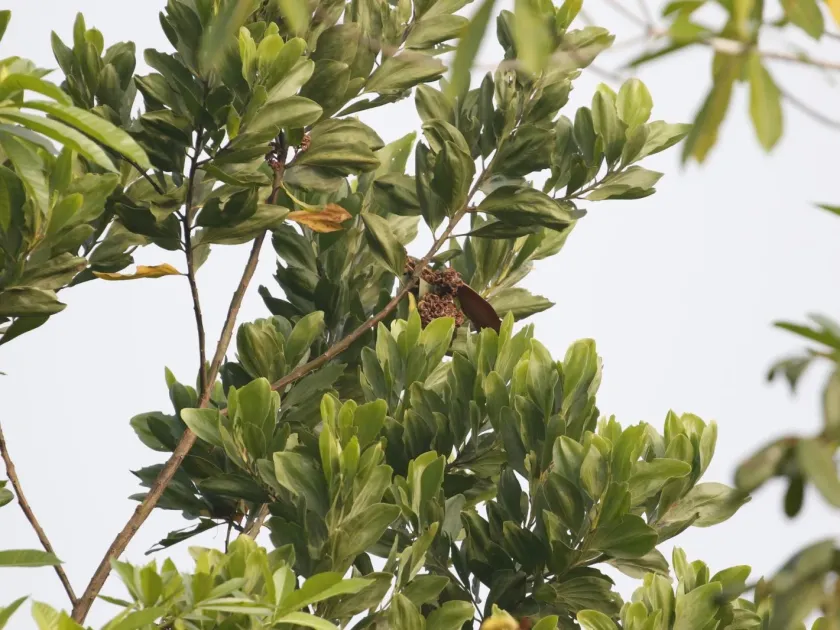
Description
Sowing dates
Acacia mangium is typically propagated using high-quality seeds collected from selected mother trees, which are then grown in specialized nursery facilities.
Due to the hard, impermeable seed coat, mechanical or chemical scarification is mandatory to ensure uniform and rapid germination rates among the seedlings.
Transplanting to the field is best performed at the onset of the rainy season to allow the root system to establish itself before the onset of dry spells.
Planting density is generally adjusted based on the end-use, ranging from 1,100 to 1,600 trees per hectare, which balances tree growth rate with stand development.
Modern nursery practices include inoculating seedlings with specific strains of rhizobia bacteria to enhance biological nitrogen fixation efficiency in the field.
Growing requirements
As a member of the Fabaceae family, Acacia mangium is well-known for its ability to thrive on highly degraded, acidic soils where other species struggle to survive.
The species is native to humid tropical lowlands and performs best with annual rainfall between 1,000 and 3,000 mm, showing a preference for stable temperatures.
It is a highly light-demanding tree that requires full sun exposure to maintain its rapid growth rate, making it unsuitable for understory or shaded environments.
The tree exhibits a remarkable capacity to improve soil fertility through nitrogen fixation and significant biomass production, making it a cornerstone in agroforestry projects.
While tolerant of various soil types, including heavy clays and sands, the species requires adequate drainage as waterlogged soils can lead to root system failure.
Yield
Acacia mangium is one of the fastest-growing commercial timber species, with yields reaching up to 30 cubic meters per hectare annually under favorable conditions.
The rotation cycle for harvesting is relatively short, usually spanning 7 to 10 years, which ensures a fast return on investment for commercial forestry enterprises.
The wood is highly valued in the pulp and paper industry, as well as for the production of high-quality furniture, veneer, and light construction lumber.
Charcoal production represents another significant economic use, as the timber produces a high-density, long-burning fuel source that is popular in local markets.
Continual improvements in tree breeding and silviculture are increasing overall productivity, focusing on stem straightness and resistance to environmental stress.
Main diseases and pests
The most severe biological threat to Acacia mangium plantations is the fungal pathogen Ceratocystis manginecans, which causes stem cankers and rapid tree wilt.
Root rot fungi, particularly those favored by stagnant water, can cause significant mortality in plantation stands if site preparation and drainage are ignored.
Defoliators and wood-boring insects may cause localized damage, particularly in young plantations, necessitating effective pest management and monitoring programs.
Large-scale monoculture plantations increase the risk of disease spread, highlighting the importance of genetic diversity and rigorous site selection for future stands.
- Regular site monitoring for fungal outbreaks
- Sanitary pruning of dead or diseased branches
- Strategic spacing to ensure proper airflow
- Deployment of pathogen-resistant clones
- Weed control during early growth stages