
Cootamundra wattle
Acacia baileyana F. Muell.
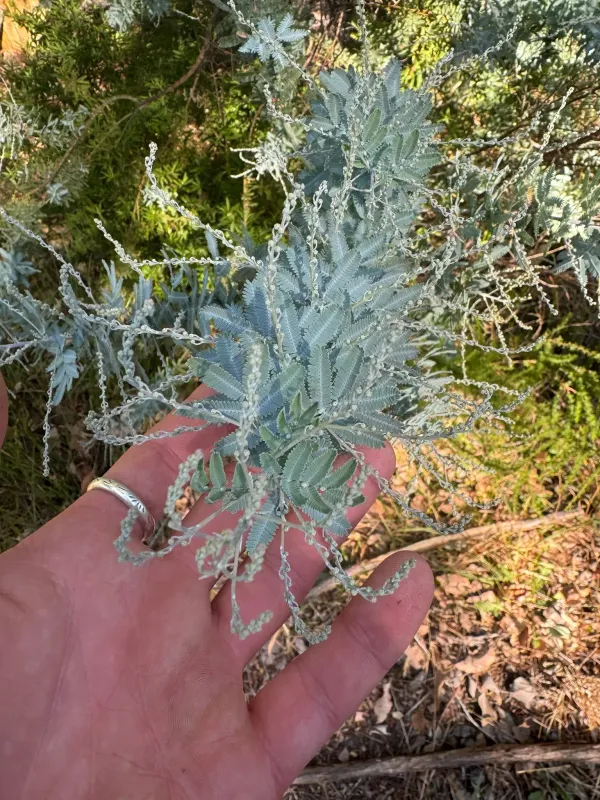
Description
Sowing dates
Propagation of Acacia baileyana is primarily done through seeds, which require scarification to break their dormancy and ensure successful germination.
Seeds are sown in a light, well-draining potting mix during early spring. A temperature range of 20–22 degrees Celsius is ideal for uniform sprouting.
Once the seedlings have developed two sets of true leaves, they should be carefully pricked out into individual pots to avoid root competition.
Transplanting into the garden should occur after the final frost risk has passed. Young plants require careful handling to preserve the integrity of their root systems.
Establishing young trees in their permanent location requires space, as the species is known for its rapid growth rate and spreading habit.
Growing requirements
Belonging to the Fabaceae family, the Cootamundra wattle is a distinctive evergreen tree native to a small area in New South Wales, Australia.
This species thrives in full sun positions and is well-suited to Mediterranean-style climates, though it can withstand moderate wind once established.
Soil requirements are relatively modest; the plant prefers well-drained, slightly acidic to neutral soils but can tolerate a variety of soil types.
Water management is crucial during the first year of growth. While mature trees are drought-tolerant, regular watering during the flowering period enhances growth.
The tree is prized for its feathery, silvery-blue foliage and vibrant yellow, globular flower clusters that appear in late winter or early spring.
Main diseases and pests
Common pests affecting Acacia baileyana include spider mites and mealybugs, especially in hot, dry, and sheltered growing conditions.
Aphids can also infest tender new shoots, causing stunted growth and the potential for secondary sooty mold development on leaf surfaces.
Root rot caused by Phytophthora or other soil-borne fungi is a significant threat, usually stemming from poor drainage or excessive soil moisture.
Management strategies involve applying appropriate systemic insecticides for pest control and ensuring excellent drainage to prevent fungal colonization.
Regular monitoring of the foliage and branches allows for early detection of infestations, preventing the need for heavy pesticide usage.