
Gum acacia
Acacia senegal (L.) Willd.
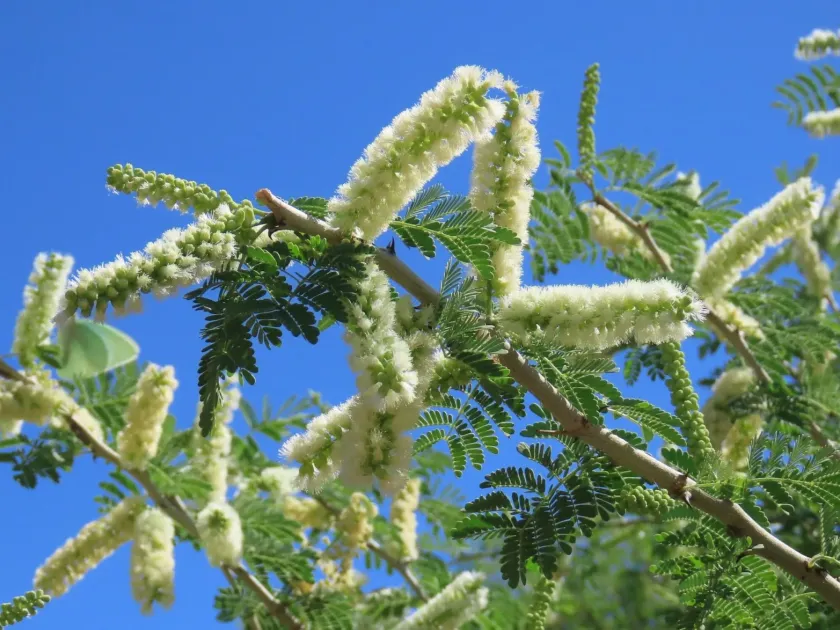
Description
Sowing dates
Seeds of Acacia senegal are typically sown at the beginning of the rainy season, as they require consistent moisture to overcome their naturally hard seed coat.
For large-scale cultivation, pre-treatment techniques such as mechanical scarification or soaking seeds in warm water are essential to ensure uniform and rapid germination.
Seedlings are transferred to nursery beds and nurtured for three to six months until they develop a robust root system capable of enduring harsh environmental stressors.
When establishing a plantation, precise spacing is critical to minimize competition for moisture and soil nutrients, particularly in arid climates where water is the limiting factor.
The tree is frequently utilized in reforestation projects in the Sahel region, as its ability to thrive in degraded soils helps stabilize fragile landscapes.
Growing requirements
Acacia senegal is a drought-resistant member of the Fabaceae family, biologically specialized for survival in semi-arid and tropical savannah environments.
It prefers temperatures ranging between 20°C and 35°C and can withstand extreme heat, though it is highly susceptible to frost, which limits its commercial range.
The species performs best in well-drained sandy or rocky soils, as it possesses a deep taproot that allows it to access subsoil moisture during long droughts.
Waterlogging is extremely detrimental to this species; therefore, site selection must prioritize elevation and soil drainage to prevent root rot and other moisture-related issues.
Being a heliophilous species, it requires full sunlight exposure to maintain healthy foliage and ensure the metabolic processes necessary for gum production.
Yield
The primary economic output of this tree is gum arabic, a versatile polysaccharide used extensively in the food, pharmaceutical, and technical industries.
A mature tree produces approximately 200 to 800 grams of gum annually, depending on tree age, environmental conditions, and the intensity of the tapping process.
The yield is economically viable as the trees are long-lived, often remaining productive for over 25 to 30 years, providing a sustainable source of income.
In addition to the gum, the tree provides valuable fodder for livestock, and its leaves and pods are utilized by local populations in dry regions.
- Global demand for natural thickening agents.
- Nitrogen-fixing capabilities improving local soil quality.
- Secondary usage as firewood and raw material for handicrafts.
Main diseases and pests
The primary biotic threats include various coleopteran pests that attack the seeds, stems, and foliage, potentially reducing the overall vigour of the plantation.
Fungal pathogens can colonize the bark, especially if the tapping wounds are improperly made or if the tools used are not sterilized between trees.
Rodents represent a significant threat to young saplings, as they can girdle the stems and lead to the death of the trees during the critical establishment phase.
Bacterial diseases can infiltrate the vascular system of the tree through damaged bark, which necessitates strict phytosanitary practices during harvesting.
Over-tapping is a significant physiological threat, as it weakens the tree's immune response and makes it susceptible to opportunistic diseases and environmental stress.
Harvesting
Harvesting of gum arabic takes place during the dry season, when water stress triggers the tree to secrete the sap as a protective mechanism against injury.
Tapping involves creating small, shallow incisions in the bark to stimulate gum flow without causing deep or permanent damage to the tree's cambium layer.
The hardened exudate is gathered manually over several weeks, ensuring that the harvested product is free of bark, dust, and other impurities.
Proper harvest management involves regular rotation of trees to allow them periods of rest and recovery, which is essential for long-term plantation sustainability.
The final harvested product must be stored in dry, cool conditions to prevent clumping and degradation, ensuring it meets international standards for quality.