
White sallow wattle
Acacia floribunda (Vent.) Willd.
Description
Growing requirements
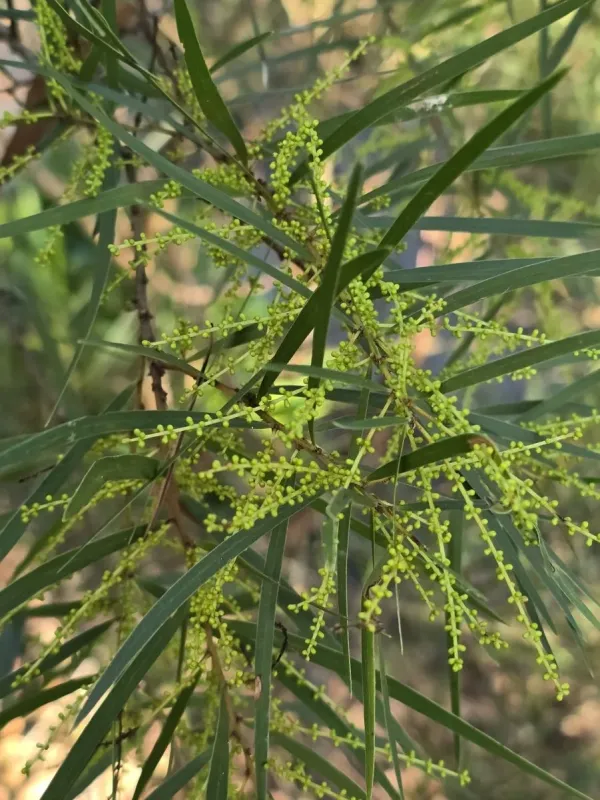
Acacia floribunda, commonly known as the white sallow wattle, is a member of the Fabaceae family. This evergreen species is native to eastern Australia and is widely recognized for its graceful, weeping habit and abundant, creamy-yellow flower spikes during the spring season.
This crop thrives in full sun but maintains good growth in partial shade. It is highly versatile regarding soil types, performing well in sandy to clay-loam soils. Unlike many other wattle species, it exhibits remarkable tolerance for moist soil conditions and occasional waterlogging.
The plant possesses the characteristic nitrogen-fixing capability of the legume family. By hosting beneficial bacteria on its root system, it actively improves soil fertility, making it an excellent choice for sustainable agroforestry and land reclamation projects.
In terms of climate, it prefers mild, frost-free, or light-frost environments. It is not suitable for regions with severe, prolonged freezing temperatures as this can cause significant dieback of the outer branches and disrupt the vascular system of young trees.
Agrotechnical maintenance includes structural pruning to encourage a denser canopy and to remove dead or diseased wood. While it is drought-tolerant once established, providing supplementary water during the first two years of growth is crucial for developing a deep and robust root system.
Main diseases and pests
The white sallow wattle is generally robust and free from serious diseases when grown in optimal conditions. Most threats arise from environmental stressors or poor site selection that leaves the tree susceptible to opportunistic pathogens.
Common pests include scale insects and mealybugs, which often cluster on the undersides of leaves or along stems. These pests can weaken the plant by extracting sap and producing honeydew, which leads to the growth of unsightly sooty mold on the foliage.
Root rot, specifically caused by Phytophthora species, can occur in poorly drained, heavy clay soils if the area remains waterlogged for extended periods. Improving soil drainage is the most effective management strategy to prevent such root-related issues.
Borers can sometimes infest the timber of older or stressed trees. Maintaining the tree's health through appropriate hydration and avoiding unnecessary physical damage to the bark are primary methods for preventing wood-boring insect infestations.
Leaf-eating insects, such as caterpillars, may occasionally cause cosmetic damage. While usually not fatal to a healthy tree, heavy infestations should be managed using systemic insecticides or biological controls like Bacillus thuringiensis to maintain the tree's overall vigor.