
Camel thorn
Acacia erioloba E. Mey.
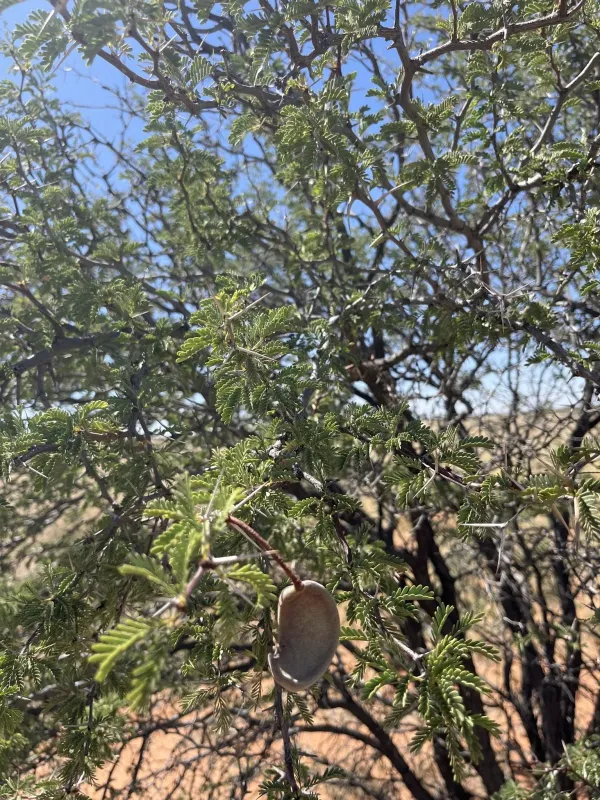
Description
Sowing dates
The propagation of Acacia erioloba is primarily achieved through seeds, which exhibit high viability when properly prepared for germination.
Because the seeds are protected by a hard, impermeable seed coat, mechanical scarification or soaking in hot water is essential to break dormancy.
Sowing should ideally coincide with the onset of the rainy season, ensuring that seedlings have adequate moisture to establish their deep taproot systems.
In nursery settings, it is crucial to provide well-drained soil mixes and deep containers to accommodate the rapid downward growth of the root system.
When transplanting saplings, care must be taken to minimize root disturbance, as the tree relies heavily on its primary root for long-term survival in arid environments.
Growing requirements
Acacia erioloba, a member of the Fabaceae family, is a slow-growing, long-lived tree perfectly adapted to the harsh conditions of southern African deserts.
This species is highly heliophilous and exhibits remarkable drought tolerance, thriving in regions with extremely low annual rainfall levels.
It prefers deep, sandy, or alluvial soils that allow its extensive root system to reach deep water tables, often extending many meters underground.
The tree plays a vital role in nitrogen fixation, forming symbiotic relationships with soil bacteria that enhance soil fertility in nutrient-poor environments.
Temperature extremes are well-tolerated, as the tree has evolved specific leaf adaptations to minimize transpirational water loss under intense desert heat.
Main diseases and pests
Overgrazing by domestic livestock and wildlife poses a major threat to young saplings, which are often consumed before they reach a height safe from browsing.
Seed-feeding insects, particularly various bruchid beetles, can severely affect the reproductive output of the trees by damaging the seeds within the pods.
Fungal diseases are uncommon but may occur in localized areas where soil drainage is poor, potentially leading to root rot or collar decay.
Certain wood-boring insects may infest older or stressed trees, potentially weakening the structural integrity of the trunks over time.
Habitat loss and deforestation due to land clearing for agriculture present the most significant long-term threat to wild populations of this unique tree.
Harvesting
The wood of the camel thorn is highly prized for its exceptional density, hardness, and durability, making it excellent for fencing, fuel, and furniture.
The seed pods are highly nutritious and serve as a crucial fodder source for domestic livestock and wild herbivores during the dry season.
Charcoal production from this tree is significant, as it produces a high-heat, slow-burning fuel that is widely used in local communities.
Various parts of the tree, including bark and gum, are utilized in traditional crafts, tanning processes, and indigenous medical applications.
Harvesting strategies prioritize sustainable practices, ensuring that the slow growth rate of the species is balanced against the demand for its valuable timber and fodder.