
Small-leaf abelia
Abelia parvifolia Hemsl.
Description
Growing requirements
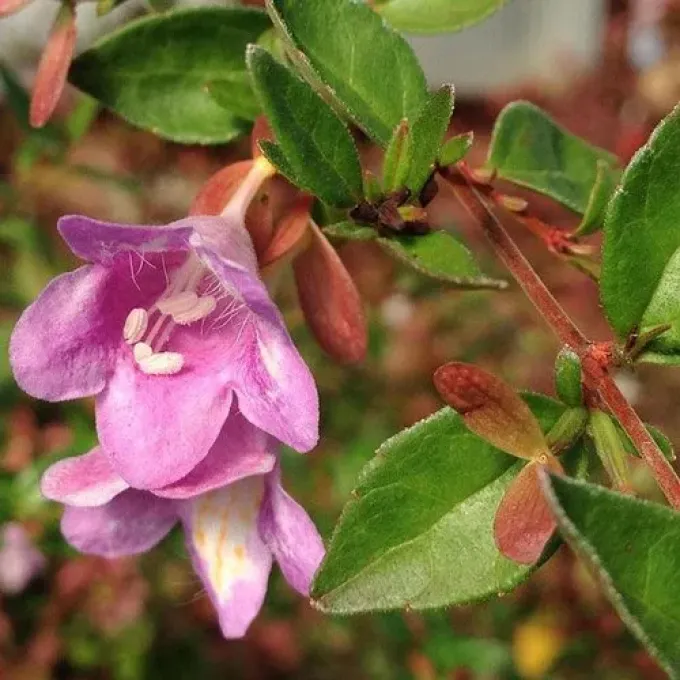
Small-leaf abelia (Abelia parvifolia) is a woody shrub belonging to the Caprifoliaceae family. It is recognized for its fine foliage and delicate, trumpet-shaped flowers, making it a popular choice for ornamental hedges and garden displays.
Native to China, this species thrives in temperate to subtropical environments. Its natural habitat is typically mountainous regions, which influences its preference for moderate temperatures and humidity levels that are consistent throughout the growing season.
The plant requires well-draining soil with a rich organic composition. It performs best in a neutral to slightly acidic soil environment. Consistent moisture is necessary, but the root system must not be exposed to waterlogging, as this leads to root decay.
Exposure to full sun is ideal for promoting flower production, although partial shade is acceptable in regions with very intense summer heat. Wind protection is essential, particularly for younger specimens, to prevent branch breakage and leaf desiccation.
Routine care involves pruning after the flowering cycle, which maintains the plant's shape and encourages new growth. Mulching around the base is recommended to retain soil moisture and regulate ground temperature during extreme weather fluctuations.
Main diseases and pests
Abelia parvifolia is generally robust, but it can be susceptible to powdery mildew in environments with poor air circulation. High humidity levels combined with lack of airflow are the primary triggers for these fungal issues.
Common pests include aphids and spider mites, which typically affect the plant during the spring and summer months. These insects target the tender foliage, potentially stunting the development of the plant if left untreated.
Integrated Pest Management (IPM) strategies are highly effective. Using horticultural soaps or systemic insecticides can manage outbreaks. Regular monitoring of the underside of leaves is recommended for early detection of mite colonies.
Root rot is the most common physiological disorder caused by improper irrigation. It is imperative to ensure that the potting medium or garden soil has adequate drainage to prevent saturation of the root zone.
Maintaining plant vigor through proper fertilization and avoiding excessive nitrogen will make the shrub less attractive to sap-sucking insects, thereby ensuring a healthy and aesthetically pleasing garden specimen.