
Korean abelia
Abelia mosanensis I. C. Chung ex Nakai
Description
Growing requirements
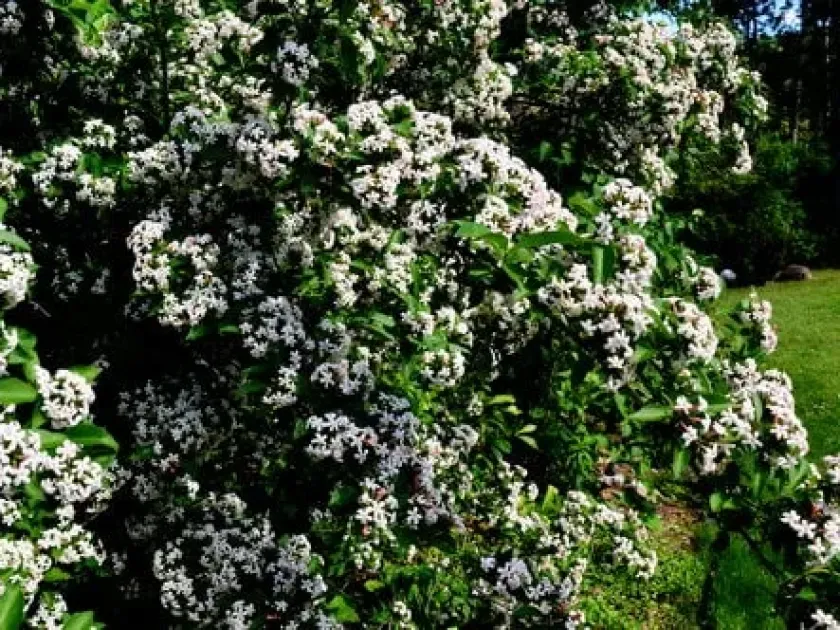
Korean abelia (Abelia mosanensis) is a deciduous flowering shrub belonging to the Caprifoliaceae family. It is highly regarded by gardeners for its incredibly fragrant, white-to-pinkish flowers that bloom in late spring and early summer.
Native to the Korean Peninsula, this species is noted for being one of the most cold-tolerant abelias available. Its botanical structure allows it to adapt well to various landscapes, making it a valuable plant for temperate zones.
The plant thrives in full sun or light shade. While it can tolerate partial shade, exposure to consistent sunlight is necessary for optimal bloom production and to maintain a dense, well-shaped habit reaching up to 2 meters in height.
Well-drained, fertile soil is a primary requirement for Abelia mosanensis. It does not tolerate waterlogged conditions, which can lead to root damage, so planting it on elevated ground or incorporating organic material is beneficial.
Standard horticultural practice includes regular watering during dry spells and consistent mulch application. Mulching helps retain soil moisture and stabilizes the soil temperature, protecting the root system during colder months.
Main diseases and pests
Korean abelia generally exhibits excellent resistance to most diseases. The most common issues arise when the shrub is placed in soil with poor drainage, which creates an environment conducive to root rot pathogens.
Pests such as aphids and spider mites may occasionally infest the foliage, particularly during hot and dry summer months. These pests feed on the plant's sap, which can weaken the shrub if not managed promptly.
Maintaining proper spacing between plants ensures good air circulation, which is the best defense against fungal infections like powdery mildew. Periodic pruning helps keep the plant center clear and healthy.
For pest control, horticultural oils or insecticidal soaps can be used as an effective and eco-friendly alternative to harsh chemicals. Always target the underside of leaves where these pests are most likely to congregate.
Vigilance is key to maintaining a healthy shrub. By monitoring for signs of stress, such as yellowing leaves or stunted growth, gardeners can intervene early to keep their Korean abelia in prime condition.