
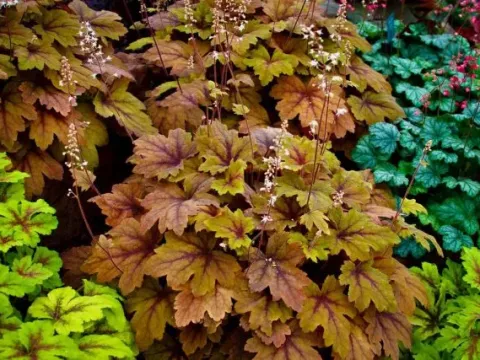
Heucherella
x Heucherella H. R. Wehrh.
Heucherella is an intergeneric hybrid resulting from a cross between Heuchera and Tiarella, belonging to the Saxifragaceae family. This perennial is highly prized by gardeners for its attractive, often variegated foliage and delicate, feathery flower spikes.
What the section contains


Heucherella
The plant thrives in partial shade conditions. While some varieties can tolerate more light, excessive exposure to direct afternoon sun often scorches the leaves, leading to dehydration and loss of the plant's decorative aesthetic value.
A well-draining, nutrient-rich, and loamy soil is ideal for Heucherella. The plant is sensitive to waterlogged conditions, which can lead to root decay; therefore, amending heavy soils with organic matter or grit is highly recommended before planting.
Regular watering is essential, especially during dry spells or high-temperature periods. However, it is crucial to apply water directly to the base of the plant to prevent the foliage from staying damp for long durations, which invites disease.
Cultural practices should include annual mulching to protect the shallow root system from extreme temperatures and moisture loss. Removing spent flower stalks can also help the plant redirect its energy towards foliage development for the next season.
The most common fungal diseases affecting Heucherella include powdery mildew and rust. These conditions are typically exacerbated by poor air circulation around the plants and high levels of humidity in the growing environment.
Root rot is a significant threat to Heucherella, often caused by poorly drained soil or excessive irrigation. Once the root system begins to decay, the plant shows signs of wilting that are often difficult to reverse with remedial treatment.
Leaf nematodes are serious pests that cause discolored patches and deformation in the leaves. Because they are difficult to control once established, it is vital to source plant material from reputable nurseries to prevent their introduction.
Vine weevils are particularly dangerous because their larvae feed on the roots, which can lead to the sudden collapse of a healthy-looking plant. Monitoring for adult weevil notches on leaves is a good way to assess the risk of infestation.
To manage these threats, gardeners should prioritize sanitation by removing debris and infected leaves, maintaining proper spacing between plants to allow airflow, and using appropriate fungicides or insecticides when necessary.