
Heucherella
x Heucherella tiarelloides (Lemoine & É. Lemoine) H. R. Wehrh.
Description
Growing requirements
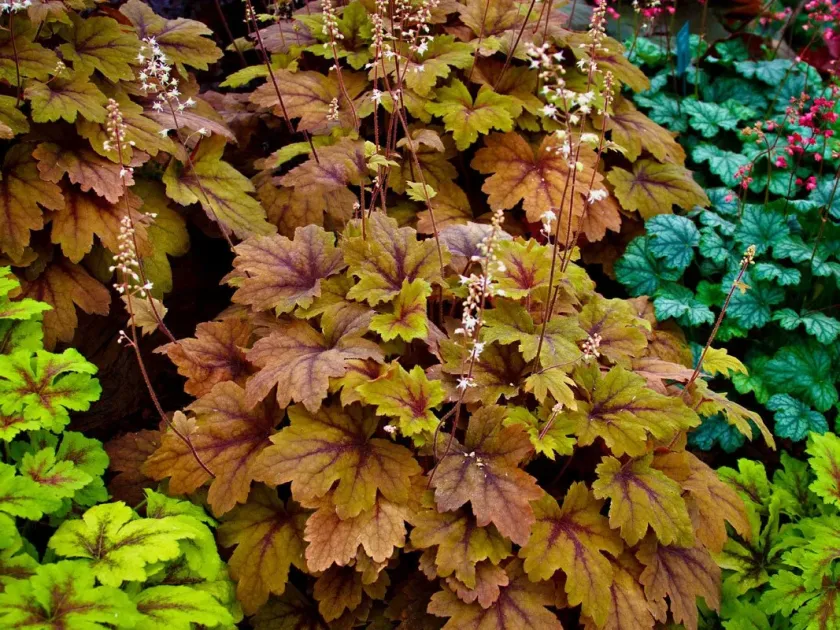
Heucherella (x Heucherella) is an intergeneric hybrid resulting from the crossbreeding of Heuchera and Tiarella. As a member of the Saxifragaceae family, it combines the intricate foliage patterns of its parents with excellent garden vigor.
The culture thrives in fertile, loamy, and well-drained soils with a slightly acidic to neutral pH level. Proper drainage is essential, as the plant is susceptible to root rot if waterlogged for extended periods during the dormant season.
Placement is critical for success; Heucherella prefers partial shade or dappled sunlight. While some varieties tolerate more sun, excessive afternoon heat can cause leaf scorch and dehydration, reducing the plant's overall aesthetic appeal.
Watering requirements remain moderate throughout the growing season. The goal is to maintain consistently moist soil without creating conditions for water stagnation. Mulching around the base helps retain moisture and regulate soil temperature.
Routine maintenance includes removing spent flower spikes and clearing away dead leaves in early spring. Fertilization should be light, using a balanced slow-release formula to encourage dense foliage growth and vibrant color development.
Main diseases and pests
Fungal diseases such as rust and Botrytis blight are common threats to Heucherella, especially in regions with high humidity or during seasons of excessive rainfall where air circulation is restricted.
Pests such as vine weevils and aphids can cause significant damage. The larvae of the vine weevil are particularly destructive as they feed on roots, often leading to the sudden collapse of established plants.
Slugs and snails frequently target young growth, leaving holes in the leaves. Using physical barriers or organic bait methods is recommended to protect the integrity of the foliage during the spring emergence phase.
Root rot, often caused by Phytophthora, is a major concern if the planting site is poorly drained. Avoiding high organic matter accumulation directly against the crown is a key cultural control method.
Integrated pest management strategies should be prioritized, including early detection through regular scouting and the removal of severely infected plant tissues to prevent secondary outbreaks in the garden bed.