
Heucherella alba
Heucherella alba (Lemoine) Stearn
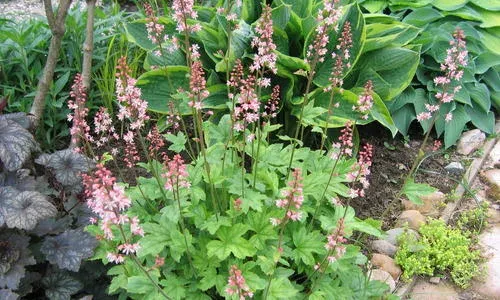
Description
Growing requirements
Heucherella alba is a successful intergeneric hybrid derived from crossing Heuchera and Tiarella. Belonging to the Saxifragaceae family, this perennial herb is highly valued in horticulture for its diverse foliage patterns and delicate, white-colored flower spikes.
This plant thrives in partially shaded environments, as excessive direct sunlight can cause leaf scorching. It prefers temperate climates where the air is moist and the light is dappled, making it an excellent choice for shaded garden beds and woodland-style landscapes.
The soil requirements for Heucherella alba involve a well-draining, nutrient-rich substrate. It performs best in neutral to slightly acidic soils. Maintaining soil aeration is crucial to prevent the roots from suffocating, which is why organic matter incorporation is highly recommended.
Agricultural techniques for this plant focus on consistent irrigation without waterlogging. During the growing season, soil moisture should be kept stable. Adding mulch around the base of the plant helps regulate ground temperature and retain necessary humidity throughout the summer.
The ornamental use of this plant is widespread in landscape design, specifically for border planting and ground cover. Its ability to maintain decorative foliage throughout the season makes it a reliable choice for professional gardeners creating aesthetic shade-tolerant arrangements.
Main diseases and pests
The primary threats to Heucherella alba include fungal issues like root rot and leaf spots, which are usually triggered by poor drainage or high humidity. Maintaining proper spacing between plants is essential to allow for sufficient air circulation and prevent fungal outbreaks.
Insect pests such as vine weevils and slugs are the most frequent threats. Vine weevil larvae can be particularly destructive as they feed on the roots, potentially killing the plant. Regular monitoring and integrated pest management are recommended to ensure plant health.