
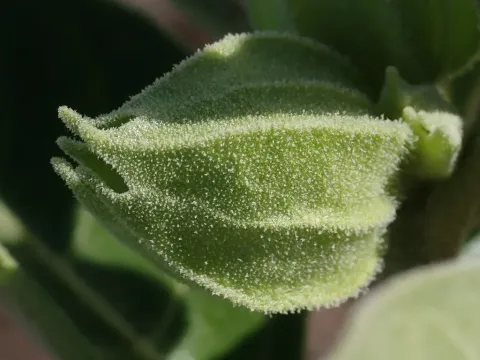
Ashwagandha
Withania
Ashwagandha (Withania somnifera) is a hardy perennial shrub belonging to the Solanaceae family, widely cultivated for its medicinal properties.
What the section contains

Ashwagandha
For large-scale production, seeds are sown either in nurseries for later transplanting or directly in prepared soil when temperatures reach 20-25 degrees Celsius.
Seeds should be planted at a depth of 1-2 centimeters in rows spaced 45-60 centimeters apart to allow for proper airflow and agricultural machinery operation.
Early spring is the preferred time for sowing in most regions, ensuring the soil is warm enough to trigger germination without the risk of late frosts.
Proper irrigation during the initial stages is crucial for consistent seedling emergence and successful establishment of the crop stand.
The plant thrives in open, sunny locations as it requires plenty of sunlight to synthesize and concentrate its medicinal active compounds effectively.
Well-drained, sandy loam or light soil is ideal for ashwagandha; the crop is sensitive to waterlogging, which can quickly lead to root rot.
It is a drought-tolerant species that requires moderate watering, making it a suitable candidate for semi-arid agricultural regions with balanced management.
A soil pH ranging from 7.5 to 8.0 is optimal for growth, allowing the plant to tolerate slightly alkaline conditions common in many farming areas.
Maintaining proper spacing is essential to reduce the humidity around the base of the plant, preventing fungal issues during the rainy season.
The primary economic output is the root, which is harvested for its high content of withanolides, the plant's key bioactive compounds.
With correct soil preparation and nutrient management, farmers can expect a yield of dry roots ranging from 500 to 800 kilograms per hectare.
Market quality depends on the size and chemical purity of the roots, which are influenced by the harvest timing and drying techniques employed.
The use of organic compost and well-rotted manure significantly enhances both the total biomass production and the overall development of the root system.
Continuous monitoring of plant development allows for adjustments in maintenance, ensuring higher returns per hectare of cultivation.
Young ashwagandha plants are vulnerable to various soil insects and aphids that can cause significant damage to the early vegetative growth stages.
Root rot is the most common disease encountered, typically caused by poor soil drainage and excess moisture in the root zone.
Mealybugs and spider mites can occasionally affect the foliage, especially in dry, hot conditions, requiring vigilant monitoring and organic intervention.
Rotating ashwagandha with non-solanaceous crops is a recommended practice to minimize the risk of soil-borne pathogens and nematode infestations.
Preventative cultural practices, such as maintaining weed-free fields, significantly lower the risk of pest outbreaks and disease transmission within the crop.
The harvest period typically occurs 150 to 180 days after planting, characterized by the yellowing and drying of the upper plant parts.
Roots are carefully lifted from the soil to minimize damage, then cleaned thoroughly of dirt and debris to prepare them for the drying process.
It is standard practice to cut the roots into smaller sections to ensure even drying and prevent internal spoilage during the curing phase.
Drying should be performed in the shade or in controlled temperature ovens at no more than 45 degrees Celsius to preserve the vital chemical constituents.
Once dried to a specific moisture content, the final product is stored in clean, breathable containers in a cool, dry place until shipment to processors.