
Ashwagandha
Withania somnifera (L.) Dunal
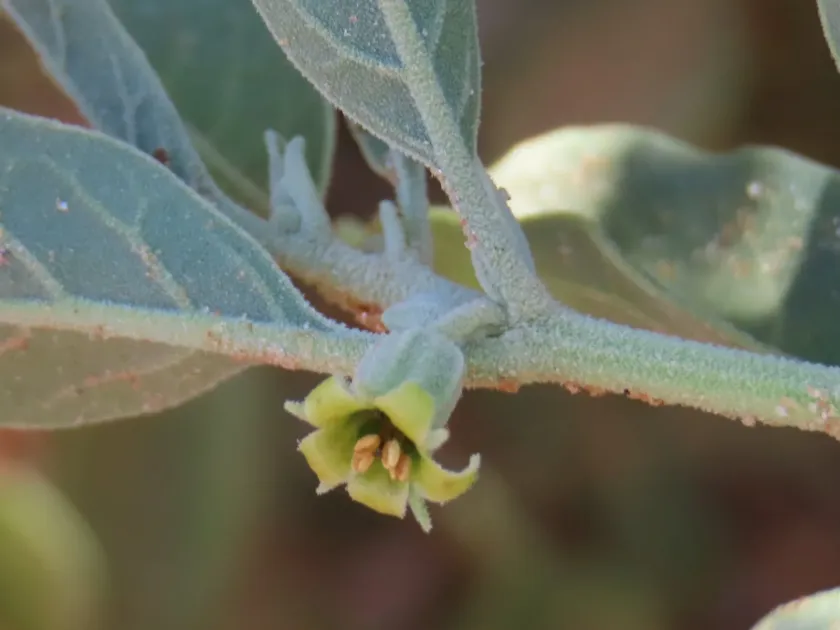
Description
Sowing dates
Ashwagandha (Withania somnifera) is typically grown as an annual crop in agricultural settings, although it is botanically a perennial. The ideal sowing period begins in the spring once soil temperatures have consistently reached 20-25 degrees Celsius, ensuring rapid germination and uniform establishment.
Seedlings are often started in protected nursery environments or plug trays about 4 to 6 weeks before the final frost date. This practice ensures that young plants are robust enough to withstand transplantation into the field once the weather is settled and warm.
Direct seeding is also viable in regions with long growing seasons, where seeds are sown at a shallow depth of 1-2 centimeters. Consistent surface moisture is required during the first two weeks of germination to ensure the delicate sprouts emerge successfully through the topsoil.
Once true leaves develop, plants should be thinned or transplanted to maintain a spacing of 30 to 45 centimeters. This distance is essential to minimize competition for sunlight and nutrients, promoting the development of healthy, thick roots that constitute the primary harvestable product.
Effective stand establishment relies on monitoring weather patterns to avoid cold stress, as young Ashwagandha plants are highly susceptible to stunted growth if exposed to low temperatures. Selecting high-quality, high-viability seeds is the first step toward a successful commercial crop cycle.
Growing requirements
As a member of the Solanaceae family, Ashwagandha thrives in hot, dry, and sunny environments. Its native range spans the arid regions of India, Northern Africa, and the Mediterranean, which dictates its preference for well-drained, sandy, or light loam soils with a neutral pH.
Water management is critical for the crop, as it is naturally drought-tolerant but susceptible to root rot in waterlogged conditions. Fields should be leveled or provided with adequate drainage systems to prevent standing water during heavy seasonal rains or intensive irrigation sessions.
High levels of solar radiation are required for the plant to reach its full potential, as sunlight intensity directly influences the synthesis of withanolides. Farmers should select open sites free from shade-casting obstructions to ensure uniform growth and high metabolite concentrations in the root tissue.
While the plant tolerates varying soil fertility, incorporating organic matter before planting improves soil structure and water retention. Heavy clay soils should be avoided or amended with sand to prevent soil compaction, which significantly inhibits the vertical elongation of the roots.
Temperature optimization is the most important agronomic factor, as Ashwagandha requires a sustained period of 25 to 35 degrees Celsius to complete its lifecycle. In cooler regions, the growing season must be strictly timed to fall within the frost-free months to avoid crop failure.
Yield
The yield of Ashwagandha is measured primarily by the dry mass of the harvested roots. A well-managed crop typically yields between 600 and 1000 kilograms of dried root per hectare, depending heavily on soil quality, plant density, and the timing of the harvest relative to the plant's maturity.
Crop productivity is not solely about biomass but also about the chemical quality of the roots. Harvesting at the peak of maturity, signaled by the yellowing of the aerial parts, ensures that the concentration of medicinal withanolides is at its highest level for commercial processing.
In addition to root production, seed yields can be a significant secondary revenue stream for specialized growers. Seeds are collected once the berries turn a distinct bright red, indicating physiological maturity and high viability for the next planting season.
Modern mechanization of the harvesting process is increasingly common, using root diggers that lift the plants without causing deep lacerations. Preserving the integrity of the root system is essential for maintaining the aesthetic and chemical quality of the product after processing.
Standardized yield assessments often involve laboratory analysis to verify that the roots meet the concentration thresholds required by herbal extract manufacturers. Consistent quality across harvests is a key requirement for maintaining long-term contracts in the global botanical market.
Main diseases and pests
Ashwagandha is susceptible to several fungal diseases, particularly root and stem rots caused by pathogens that thrive in high-humidity environments. Implementing strict crop rotation schedules, avoiding Solanaceae monocultures, and ensuring excellent field drainage are the primary preventative measures.
Pest pressure from aphids and spider mites can be intense during hot, dry spells, as these insects reproduce rapidly. Integrated Pest Management (IPM) strategies, including the use of biological controls or organic soaps, are effective in maintaining healthy plant populations without compromising medicinal quality.
Phytoplasma diseases transmitted by insect vectors can cause severe damage, leading to symptoms like little-leaf syndrome and stunted growth. Infected plants must be rogued immediately to prevent the rapid spread of the pathogen throughout the entire plantation.
Cutworms and other soil-borne caterpillars can occasionally cause damage by feeding on the seedling stems during early development. Careful scouting during the first month after transplanting allows for early intervention, protecting the crop stand and ensuring long-term yield stability.
Sanitation practices are essential, including the removal of crop residues after harvest to reduce the overwintering potential of pests and diseases. By maintaining a clean environment and utilizing resistant cultivars, farmers can significantly reduce the need for synthetic chemical inputs.
Harvesting
The harvest cycle for Ashwagandha concludes approximately 150 to 180 days after planting, once the leaves turn yellow and the stems begin to wither. This physiological transition marks the end of active root growth and the optimal time to secure the highest quality herbal components.
Plants are lifted from the soil, typically using specialized equipment that minimizes root breakage. Once harvested, the roots are immediately cleaned of soil and organic debris, as contamination can degrade the shelf life and quality of the final dried product significantly.
The roots are often sliced into smaller, uniform segments immediately after washing to facilitate faster and more uniform drying. This step is critical, as large, thick roots may rot internally if not dried quickly enough in an environment with high relative humidity.
Drying is conducted in shade or temperature-controlled rooms with active ventilation to preserve the heat-sensitive chemical constituents. It is imperative to keep temperatures below 50 degrees Celsius to prevent the degradation of valuable bioactive compounds present in the root tissue.
Final storage involves packing the dried roots in moisture-resistant, breathable containers or bags. Storing the product in a cool, dry, and dark warehouse environment ensures that the chemical profile remains stable for a minimum of one to two years before reaching the final consumer.