
Nierembergia repens
Nierembergia repens Ruiz & Pav.
Description
Sowing dates
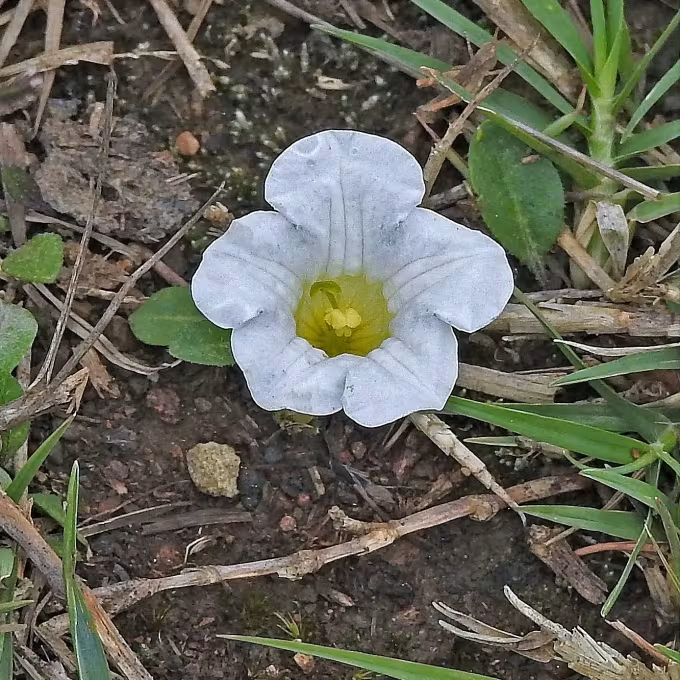
Nierembergia repens is a low-growing perennial herb belonging to the Solanaceae family, widely appreciated for its creeping habit and cup-shaped white flowers.
Seeds should be sown indoors in late winter, roughly 8 to 10 weeks before the expected last frost date, ensuring high humidity and stable warmth for successful germination.
Transplanting into the garden is advised once the soil has warmed up significantly and the risk of frost has completely passed for the season.
The plant thrives in well-prepared beds, and spacing is crucial; plants should be placed about 15-20 cm apart to allow for proper expansion and coverage.
Once established, the plant spreads via stolons, creating a dense, attractive mat that effectively suppresses weeds if managed correctly from the start.
Growing requirements
Native to South America, this species prefers locations with full sun to light shade, where it can receive enough energy to sustain its long flowering period.
The soil requirements are specific: it prefers moist, well-draining, and humus-rich soil, and it generally does not tolerate drought conditions or prolonged periods of waterlogging.
Regular maintenance includes consistent irrigation, as the plant reacts negatively to dry spells, which may cause wilting and premature dropping of flower buds.
Feeding should be consistent throughout the active growth season; a balanced water-soluble fertilizer applied every two weeks helps keep the foliage lush and vibrant.
In cooler climates, Nierembergia repens may require winter protection or be treated as an annual, as it is not fully hardy in frost-prone regions.
Main diseases and pests
The primary threats include fungal diseases such as root rot and leaf spots, which are often exacerbated by poor air circulation and excessive moisture in the root zone.
Pests like aphids and spider mites can infest the foliage, particularly during dry and hot weather, necessitating prompt management to avoid severe damage.
Integrated pest management, including regular inspection and the use of insecticidal soaps, is often sufficient to keep the plant healthy and thriving.
Good cultural practices, such as proper spacing and avoiding overhead watering, significantly reduce the risk of common fungal infections.
In cases of severe infestation or infection, pruning back the affected parts and applying appropriate treatment is essential to maintain the garden's aesthetics.