
Nierembergia hippomanica
Nierembergia hippomanica Miers
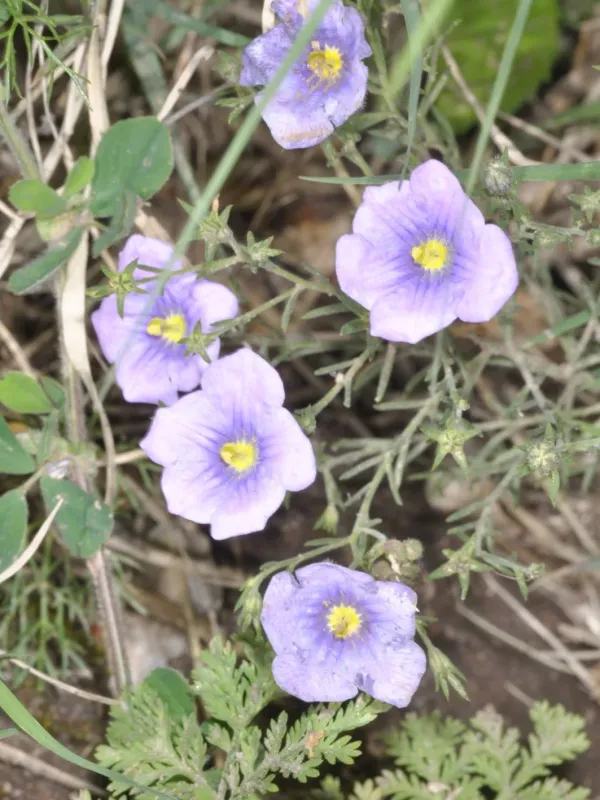
Description
Sowing dates
Nierembergia hippomanica is an herbaceous plant widely valued in ornamental horticulture. Cultivation typically begins with seeds sown indoors in late winter or early spring to ensure robust plant development before the frost-free season.
The seeds are tiny and should be surface-sown on a fine-textured, moist potting medium. They require light to germinate, so they should not be covered with soil, but kept in a humid environment at temperatures ranging from 20 to 22 degrees Celsius.
Seedlings usually emerge within two to three weeks. Once the plants reach the stage of having two true leaves, they should be pricked out into individual pots to allow sufficient space for the root system to mature and strengthen.
Transplanting to the permanent garden site occurs only after the danger of frost has passed. Hardening off the young plants gradually over several days is essential to prevent transplant shock and ensure high survival rates in the field.
Proper spacing is crucial for individual plant development, typically requiring 20–30 centimeters between plants. This distance allows for optimal airflow and reduces the risk of moisture accumulation at the base of the stems.
Growing requirements
As a member of the Solanaceae family, this species thrives in full sun locations. Sufficient solar exposure is the primary driver for high-density blooming and the maintenance of a compact, healthy growth habit throughout the season.
The ideal soil substrate is sandy, well-draining, and slightly acidic to neutral in pH. If the local soil is heavy or prone to waterlogging, it is strongly recommended to incorporate organic matter or sand to improve porosity and aeration.
Irrigation management is vital for the health of the plant. While it appreciates consistent moisture, it is highly sensitive to waterlogged conditions which quickly lead to root rot. Irrigation should target the root zone to keep foliage dry.
Nutrient supply should be managed through regular fertilizing schedules during the active growing season. A balanced water-soluble fertilizer applied every two weeks helps promote ongoing flower production and prevents nutrient deficiencies.
The crop prefers a warm climate with temperatures between 18 and 25 degrees Celsius. While it can withstand occasional heat, extreme temperature spikes require careful monitoring to ensure that irrigation is sufficient to prevent leaf scorch.
Main diseases and pests
Spider mites are the most common pest associated with this crop, particularly in dry and hot conditions. They cause characteristic stippling on the leaves and can severely weaken the plant if left untreated for extended periods.
Aphids can also colonize the growing tips of the plants, causing deformation and stunted growth. Regular monitoring of the underside of the leaves is recommended for early detection of these pests to prevent population explosions.
Root rot caused by fungal pathogens is the most significant disease threat to the plant. This is almost exclusively linked to poor drainage and over-irrigation, leading to the decay of the root system and eventual plant collapse.
Cultural control is the most effective approach to managing these threats. Maintaining a clean garden bed, removing weeds, and ensuring proper plant density are primary tactics to prevent disease outbreaks and pest colonization.
In cases of severe infestation, targeted applications of pesticides or organic insecticidal soaps can be utilized. All applications should be performed according to label instructions to ensure safety and effectiveness for the specific plant variety.