
Vigna reticulata
Vigna reticulata
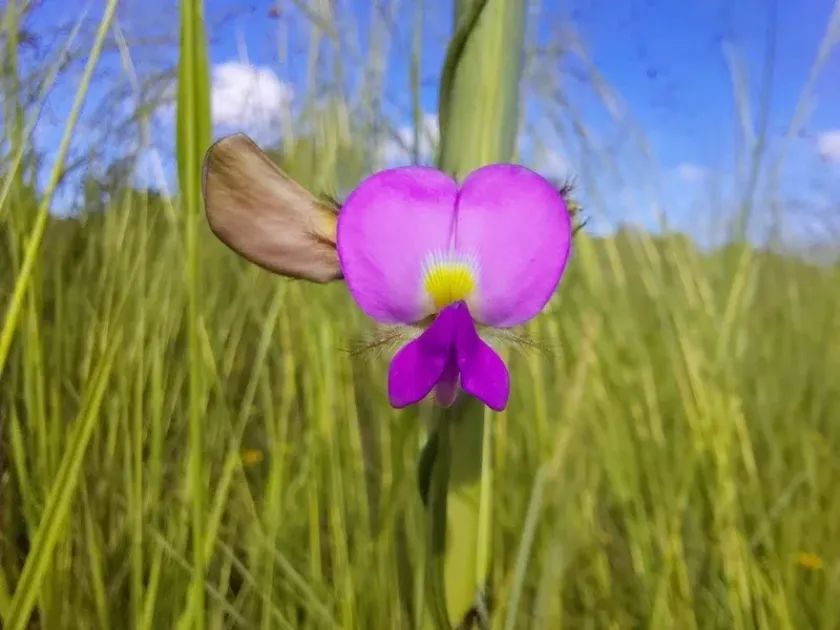
Description
Sowing dates
Vigna reticulata is an herbaceous plant belonging to the Fabaceae family. It is recognized for its ability to thrive in tropical climates, often found in regions where soil moisture can be limiting for other legume species.
The optimal sowing time is when soil temperatures are consistently above +20°C. Since the crop is sensitive to cold, planting should be timed to avoid any risk of frost or cold spells that could hinder seedling emergence.
Seeds should be planted at a depth of approximately 3–5 cm. Ensuring the seedbed is well-prepared and free of large clods helps achieve uniform germination, which is vital for standardized crop development.
Row spacing is typically set between 60–70 cm. This spacing facilitates mechanical weeding and ensures that each plant receives sufficient solar radiation and nutrients for vigorous growth during the vegetative phase.
Proper inoculation of seeds with nitrogen-fixing bacteria is highly recommended for Vigna reticulata. This biological interaction enhances the plant's ability to fix atmospheric nitrogen, reducing the need for chemical fertilizers.
Growing requirements
This crop prefers well-drained, sandy loam soils. While it demonstrates tolerance to poor soil quality, yields are significantly improved in fertile soils with good aeration and an appropriate pH balance.
Vigna reticulata is a heat-loving plant that requires full sunlight. It is highly susceptible to shade, and lack of light can lead to spindly growth and reduced pod formation, significantly lowering the overall yield potential.
Water requirements are moderate. The crop has a deep taproot system that allows it to tolerate brief droughts, but irrigation or timely rainfall is essential during the flowering and pod-filling stages.
The agronomic management of this culture emphasizes avoiding excessive nitrogen fertilization, as it may stimulate vegetative growth at the expense of reproductive output. Focus on potassium and phosphorus is advised.
Crop rotation is critical in the management of this species. It should be grown after cereals to disrupt the life cycles of soil-borne pests and diseases common to the Fabaceae family.
Main diseases and pests
Pests such as aphids, pod borers, and foliage-feeding beetles pose the greatest risk to Vigna reticulata. Early detection through field scouting is the most effective way to prevent widespread infestation.
Fungal diseases, including anthracnose and various leaf spots, are more prevalent in humid environments. Ensuring good ventilation between rows and avoiding excessive plant density can significantly reduce the risk.
Root-knot nematodes can become a problem in soils that have been repeatedly used for legume production. Implementing a diverse crop rotation is a primary strategy for long-term nematode management.
The use of certified, clean seeds is a vital practice to prevent the introduction of seed-borne pathogens that can cripple young plantings and reduce harvest volume.
Integrated Pest Management (IPM) techniques, including the use of trap crops and biological control agents, help maintain crop health while minimizing the environmental impact of synthetic pesticides.