
Vigna hosei
Vigna hosei
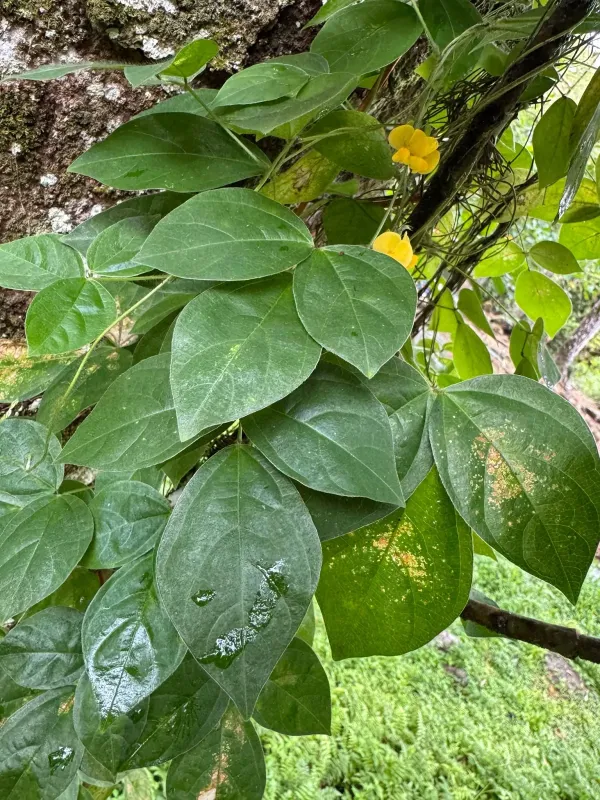
Description
Sowing dates
Vigna hosei is typically sown at the beginning of the rainy season to ensure optimal plant establishment. As a perennial and fast-growing species, seeds are sown directly into prepared soil, taking into account the moisture availability of the site.
The seeding rate depends on the intended use: for creating a solid ground cover, a denser planting pattern is required. Seeds should be planted at a depth of 2–3 cm, which ensures good contact with the soil and rapid germination in tropical conditions.
A critical condition for successful sowing is the presence of sufficient soil moisture. In commercial plantations, such as rubber plantations, Vigna is sown in rows between the main trees to control erosion and improve soil fertility.
After emergence, the crop rapidly increases its vegetative mass, creating a dense canopy. Due to its vigorous growth habit, it effectively suppresses weed development within the first few months after sowing.
The culture does not require frequent replanting, as it is capable of regenerating and maintaining productivity for many years. Choosing the right planting dates allows the plant to maximize its nitrogen fixation potential.
Growing requirements
Vigna hosei belongs to the Fabaceae family and is a perennial herbaceous plant originating from the tropical regions of Southeast Asia. It is adapted to hot and humid climatic conditions where temperatures remain high throughout the year.
The plant demonstrates high tolerance to various soil types, including poor and acidic substrates. It prefers well-drained soils, yet it can tolerate temporary waterlogging, making it a versatile choice for tropical environments.
Key agronomic requirements include sufficient sunlight, although Vigna can tolerate partial shading under the canopy of perennial tree crops. Optimal development is achieved under regular precipitation cycles.
The primary economic use is as a cover crop for erosion control and nitrogen accumulation. Through symbiosis with rhizobia, Vigna significantly enriches the topsoil layer with organic matter and available nitrogen.
In agroforestry systems, Vigna hosei is valued as a living mulch component. It helps maintain soil structure, reduces surface soil temperature, and prevents moisture evaporation, which is critical for young plantation trees.
Main diseases and pests
The main threats to Vigna hosei include fungal diseases that develop in conditions of stagnant air and excessive humidity. Foliar spots can lead to reduced growth rates and loss of biomass if left unmanaged.
Among pests, the most significant damage is caused by insects that feed on vegetative parts, such as leaf-eating caterpillars and weevils. In some instances, root damage from nematodes has been documented.
Disease prevention involves ensuring correct planting density and periodic mowing, which improves canopy ventilation. Utilizing resistant populations is considered the most effective control strategy.
Unlike many other agricultural crops, Vigna hosei possesses strong natural resistance to most typical tropical pathogens. Its robust immunity allows growers to minimize chemical inputs in the soil.
When the first signs of pest outbreaks are detected, integrated pest management methods are recommended. Ecological practices, such as attracting natural predators and beneficial insects, are often sufficient to maintain the balance.