
Vigna kirkii
Vigna kirkii
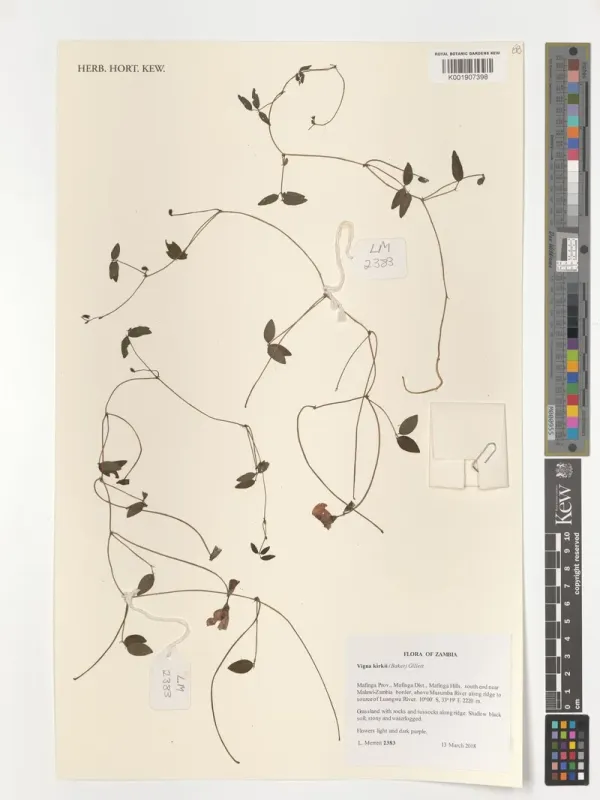
Description
Growing requirements
Vigna kirkii is a perennial herbaceous plant belonging to the Fabaceae family. This species is native to East Africa and is well-adapted to the challenging conditions of the savanna ecosystem, where water scarcity is a frequent limiting factor.
The plant exhibits remarkable tolerance to heat and poor soil fertility, which makes it an interesting subject for agricultural diversification in tropical and subtropical regions. It performs best in well-drained soils with a balanced pH profile.
Botanically, it features a robust root architecture that supports its survival during extended dry periods. Its growth habit is typically trailing or sub-erect, allowing it to cover the soil surface, which helps in retaining moisture and suppressing weed growth.
Like many other legumes, Vigna kirkii engages in symbiotic relationships with nitrogen-fixing bacteria. This biological capability provides a natural fertilization effect, making it highly compatible with integrated cropping systems.
Climate requirements include stable, warm temperatures typically ranging between 20°C and 30°C. The species lacks frost tolerance, restricting its active growth phase to frost-free intervals in specific geographical zones.
Main diseases and pests
The primary threats to Vigna kirkii productivity are soil-borne pathogens, particularly in areas with poor drainage. Fungal diseases such as root rot can severely affect the establishment of the crop if irrigation is managed improperly.
Pests, specifically bruchid beetles, represent a major risk to seed storage. These insects can quickly degrade the quality of harvested grains, making airtight storage solutions and pre-storage treatment essential for agricultural management.
Foliar pests, including various caterpillars and aphids, can cause significant damage to the leaf area during the vegetative phase. These pests may also act as vectors for various viral diseases commonly found in the Vigna genus.
Competition from fast-growing weeds can significantly suppress the early development of Vigna kirkii. Mechanical weeding or appropriate spacing is necessary to ensure the crop establishes a dominant position in the field during the first few weeks.
To minimize disease pressure, producers should implement crop rotation strategies. Avoiding continuous cropping of legumes on the same site helps to break the life cycle of common pathogens and insects associated with the species.