
Vepris hiernii
Vepris hiernii
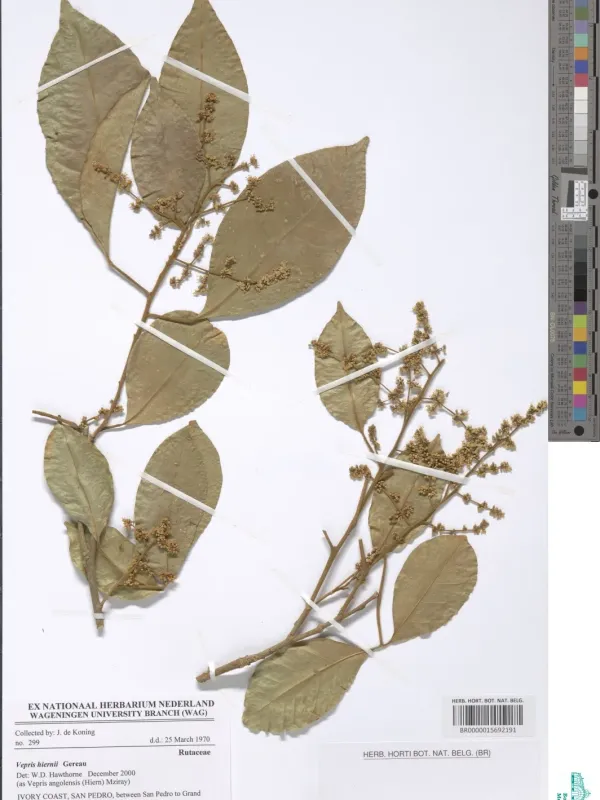
Description
Growing requirements
Vepris hiernii is a plant belonging to the Rutaceae family, primarily native to the tropical regions of Africa. This species typically grows as a small to medium-sized tree, well-adapted to the high humidity and stable temperatures of tropical ecosystems.
Cultivation of this species requires well-draining, nutrient-rich soil to prevent the accumulation of water, which the roots cannot tolerate. A slightly acidic to neutral soil profile is generally optimal for healthy development and nutrient uptake.
The plant thrives in warm climates and requires significant solar radiation to maintain its growth rate. However, young specimens benefit from filtered light to prevent leaf scorching, especially during the peak of the dry season in their native habitats.
Proper agrotechnical management involves maintaining consistent moisture levels in the soil without causing waterlogging. Regular pruning is recommended to shape the canopy, which helps in managing plant health and promoting denser foliage growth.
Economically, Vepris species are often studied for their essential oil content and high-quality timber properties. While Vepris hiernii is less commercialized than other relatives, it holds value in local forestry and traditional landscaping projects.
Main diseases and pests
Common phytopathological threats include fungal infections affecting the roots and collar region. These usually occur due to poor site drainage or excessive irrigation during cool weather spells, necessitating careful moisture management.
Pest pressures primarily include aphids and scale insects, which target the soft tissues of the leaves. Integrated pest management strategies, involving both biological controls and targeted chemical treatments, are recommended to maintain plant vitality.