
Vepris bachmannii
Vepris bachmannii
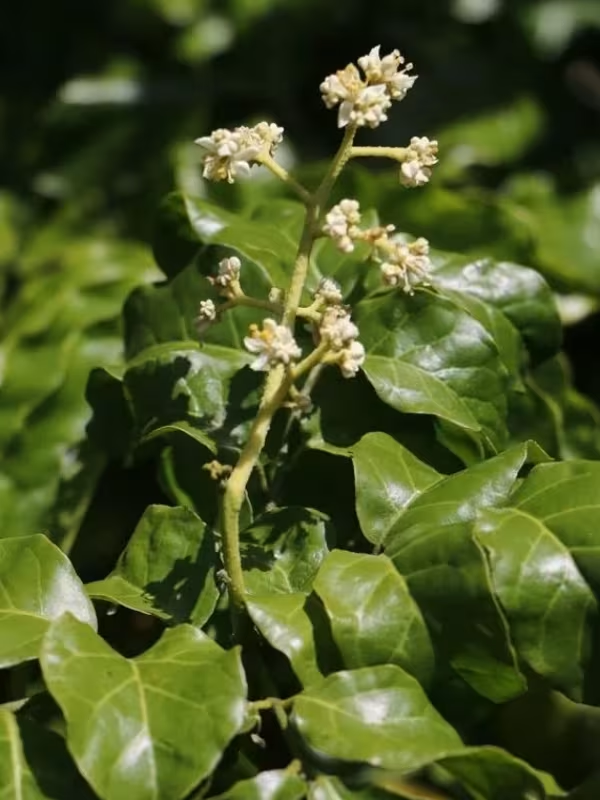
Description
Growing requirements
Vepris bachmannii is a prominent evergreen woody plant belonging to the Rutaceae family. Structurally, it grows as a sturdy shrub or a small tree, exhibiting typical morphological traits of the genus, including aromatic foliage that releases essential oils when crushed.
Originating from the coastal regions of South Africa, this species thrives in sheltered forest environments. It is adapted to fertile, well-draining soils that support its root system while preventing waterlogging, which is critical for the long-term health of the plant.
Botanically, the plant is distinguished by its trifoliate leaves and a dense growth habit, allowing it to occupy a significant niche in the forest understory. It requires consistent humidity levels and protection from harsh, drying winds, which can be detrimental to the delicate leaf structures.
Regarding climate, Vepris bachmannii prefers moderate to warm temperatures, reflecting its subtropical origins. It is not cold-hardy, and frost protection is essential if the species is cultivated outside its natural habitat in regions with extreme seasonal fluctuations.
The cultivation of this species focuses primarily on its environmental utility and conservation interest. While not a large-scale commercial crop, it remains a significant subject of study for its phytochemical properties and its role as a botanical asset in preserving regional plant diversity.