
Vepris grandifolia
Vepris grandifolia
Description
Growing requirements
Vepris grandifolia is a tree species belonging to the Rutaceae family. Native to the tropical regions of East Africa, this evergreen plant is well-adapted to humid forest ecosystems where it plays a significant role in the local ecology.
The crop thrives in tropical climates characterized by high humidity and consistent temperatures. It does not possess significant frost tolerance, meaning successful cultivation is limited to zones with stable, warm weather throughout the year.
Regarding soil conditions, this plant prefers deep, well-drained, and nutrient-rich soils. Waterlogging should be avoided at all costs, as the root system requires proper aeration to function correctly and avoid physiological stress.
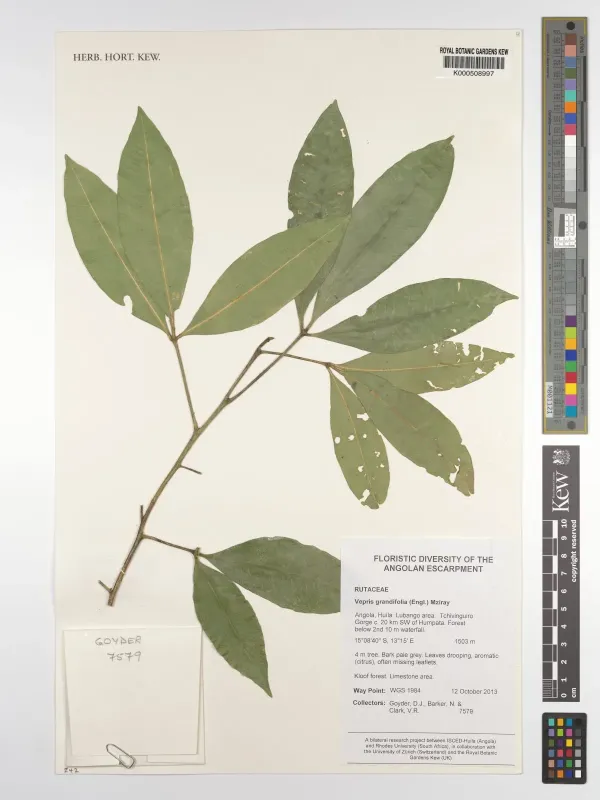
Botanically, Vepris grandifolia is known for its large, leathery leaves which contain aromatic oils typical of the Rutaceae family. The tree forms a dense canopy and can serve as a vital component in multi-story agroforestry systems.
The economic value of this tree is derived from its high-quality, durable timber, which is highly sought after for local craft and construction. Furthermore, extracts from its leaves and bark have been historically used in traditional medicinal practices.
Main diseases and pests
The primary threats to Vepris grandifolia cultivation are fungal pathogens that thrive in humid environments. These can lead to leaf spots or stem infections if proper air circulation is not maintained within the stand.
In terms of pests, sap-sucking insects and various types of borers can affect tree vigor. Implementing a regular maintenance schedule and monitoring for early signs of infestation is essential for ensuring the health of the plantation.