
Vanda curvifolia
Vanda curvifolia (Lindl.) L. M. Gardiner
Description
Growing requirements
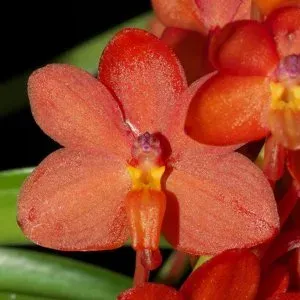
Vanda curvifolia is a member of the Orchidaceae family, known for its distinct epiphytic habit. Native to the tropical regions of Southeast Asia, including parts of China and Myanmar, this species thrives in high-humidity environments where it grows attached to tree branches, utilizing its thick, aerial roots to capture moisture and nutrients from the atmosphere.
The cultivation of Vanda curvifolia requires specific environmental conditions. It demands warm temperatures, ideally between 22 and 28 degrees Celsius, and a consistently high humidity level. Unlike many traditional crops, this orchid does not grow in soil, as its roots require constant air circulation to prevent fungal growth.
Agronomic management involves placing the plants in open wooden baskets or mesh pots. This setup ensures that the root system can dry out quickly after watering, which is essential for maintaining health. The medium, if used, consists of large pieces of pine bark or charcoal to facilitate drainage and airflow.
Light intensity is a critical factor in the plant's development. Vanda curvifolia prefers bright, filtered light. Direct tropical sun can scorch the leaves, so growers often employ shading materials in greenhouse settings to provide the necessary balance for robust photosynthesis without causing heat stress.
Fertilization is provided through diluted, specialized orchid-grade minerals applied during the watering cycle. Because these plants have no soil buffer, managing salt accumulation in the root zone is vital. Periodic flushing with pure, high-quality water is recommended to prevent salt burn on the delicate root tips.
Main diseases and pests
Common threats to Vanda curvifolia include bacterial and fungal pathogens that thrive in stagnant, humid air. Soft rot is particularly destructive, often starting in the leaf axils and moving rapidly to the stem, leading to the total collapse of the plant if not addressed immediately with systemic fungicides.
Pest pressures primarily come from scale insects, mealybugs, and spider mites. These pests extract sap from the foliage, leading to yellowing, stunted growth, and a loss of aesthetic value. Regular scouting and the application of horticultural soaps or selective insecticides are standard defense protocols.
Maintaining proper ventilation is the most effective cultural control method against disease. By using circulation fans and avoiding overcrowding in the cultivation area, growers can significantly reduce the risk of pathogen outbreaks and improve the overall vigor of the plants.
Water quality plays a significant role in plant health. Utilizing water with a balanced pH and low mineral content prevents root mineral toxicity. Growers should monitor irrigation water for excess chlorine or calcium, as these can accumulate and inhibit the plant's ability to absorb essential micronutrients.
Success with this crop relies on careful observation of the growth cycle. As a slow-growing epiphyte, Vanda curvifolia requires patience and precise environmental control. By mimicking its native tropical microclimate, producers can achieve consistent flowering and healthy vegetative growth year after year.