
Vanda falcata x Vanda coerulescens hybrid
hybrids between Vanda falcata (Thunb.) Beer and Vanda coerulescens Griff.
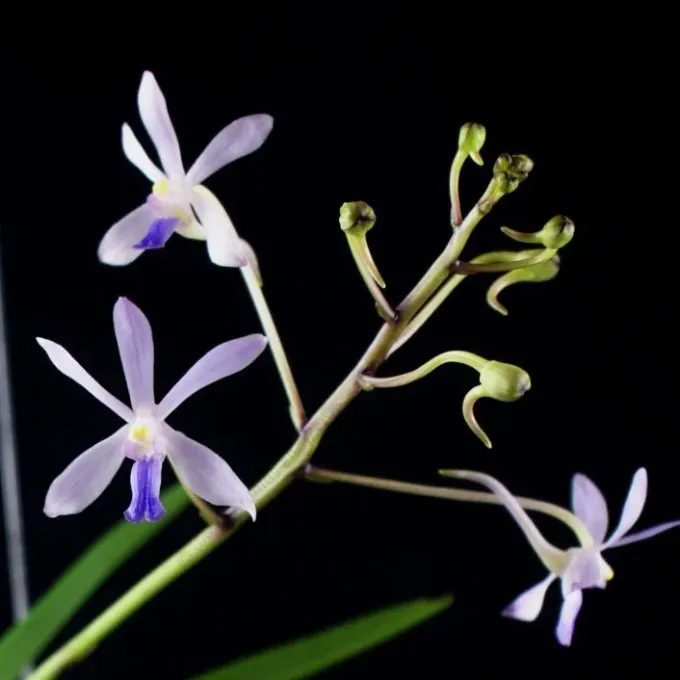
Description
Growing requirements
This hybrid is a distinctive representative of the Orchidaceae family, specifically bred from the Japanese species Vanda falcata and the Asian Vanda coerulescens. It is prized for its compact growth habit and its ability to bloom with fragrant, often blue-tinted flowers.
Native to high-altitude environments in East Asia, these hybrids thrive in conditions that mimic their natural tropical and subtropical habitat. A temperature range between 15°C at night and 26°C during the day is considered ideal for maintaining metabolic stability.
Humidity requirements are quite specific, needing to be kept between 60% and 75%. To achieve this in home environments, growers often use ultrasonic humidifiers or place the plants on trays filled with expanded clay and water, ensuring the pot does not sit directly in the water.
The planting medium must be highly porous. Most professional growers utilize large-chunk fir bark, charcoal, and perlite. Because this hybrid is epiphytic, it demands excellent airflow around the roots, making slatted baskets an excellent choice for planting.
Irrigation should be performed in the morning to allow foliage to dry completely before the temperature drops at night. Using filtered or distilled water is highly recommended to prevent salt accumulation in the substrate, which can burn sensitive orchid root tips.
Main diseases and pests
Bacterial soft rot is a major threat if moisture accumulates in the leaf axils. This disease spreads quickly and can cause the entire crown of the orchid to collapse within days, necessitating immediate surgical removal of infected tissue.
Scale insects and mealybugs are the most common pests. They hide in the leaf junctions and along the roots, drawing nutrients from the plant. Manual removal with alcohol-soaked swabs or systemic insecticidal treatment is necessary for effective control.
Root rot caused by Rhizoctonia is common when the substrate remains soggy for too long. If roots turn mushy and dark, the plant should be repotted immediately into fresh, sterile media, and all damaged roots must be trimmed back to healthy tissue.
Fungal leaf spotting can occur if the humidity is high but ventilation is inadequate. Improving air circulation with small fans usually mitigates this problem, though targeted fungicide applications may be needed for severe infestations.
Spider mites thrive in warm, dry environments and can cause severe damage by piercing cell walls. Regular misting and proper humidity management significantly reduce the risk of mite colonization on the leaves.