
Vanda falcata x Vanda ampullacea
hybrids between Vanda falcata (Thunb.) Beer and Vanda ampullacea (Roxb.) L. M. Gardiner
Description
Growing requirements
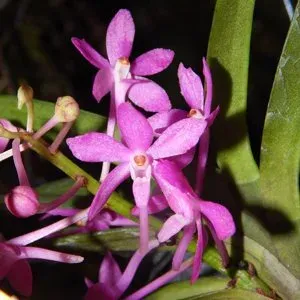
The hybrid Vanda falcata x Vanda ampullacea is a charming intergeneric orchid belonging to the Orchidaceae family. It is prized for its manageable size and the unique combination of its parents' floral characteristics, making it a popular choice for hobbyist collectors.
Successful cultivation requires high light intensity, typically filtered or diffused sunlight. In greenhouse environments, maintaining a light level of approximately 25,000 lux is generally recommended to encourage healthy foliage and reliable annual flowering.
The species thrives in warm conditions with significant air movement. It is crucial to maintain a day-to-night temperature differential, which serves as a physiological trigger for spike development and overall plant vitality.
Humidity requirements are relatively high, ideally staying between 60% and 70%. In arid climates, the use of ultrasonic humidifiers or misting systems is necessary to maintain the plant's health and prevent dehydration of the thick, fleshy roots.
As an epiphytic plant, it should be grown in an environment that allows roots to dry out completely between waterings. Baskets or wooden mounts are superior to traditional pots as they mimic the natural growth conditions of the parent species.
Main diseases and pests
Common pests affecting this hybrid include spider mites, mealybugs, and scale insects. These pests can cause significant damage to the plant's leaves and stems, eventually weakening the entire specimen if left untreated.
Pathogenic fungi and bacteria pose a risk, especially during periods of high humidity and poor ventilation. Water accumulating in the leaf axils is a frequent cause of crown rot, which can prove fatal to the plant.
Mineral salt accumulation from improper irrigation water can lead to root toxicity and necrosis. It is highly advisable to use reverse osmosis or rainwater to prevent the buildup of salts on the roots and in any porous substrate.
Regular monitoring of the foliage and root system is the best defense. Growers should be vigilant for signs of discoloration, wilting, or sticky residue, which often indicate the presence of sap-sucking insects.
Implementation of a preventative spray program using biological agents or systemic insecticides can help manage potential outbreaks before they compromise the structural integrity of the orchid plant.