
Vanda falcata x Vanda curvifolia
hybrids between Vanda falcata (Thunb.) Beer and Vanda curvifolia (Lindl.) L. M. Gardiner
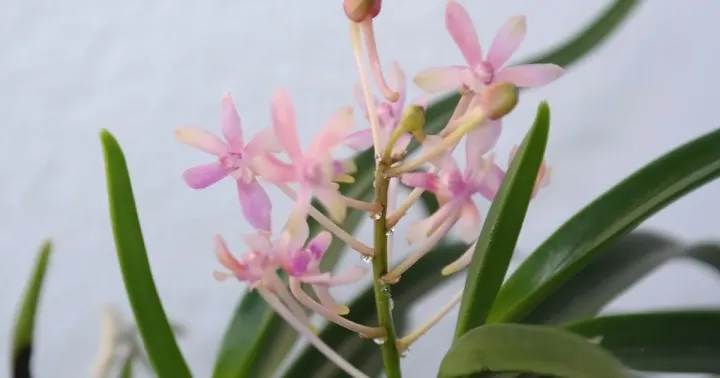
Description
Growing requirements
Vanda falcata x Vanda curvifolia is an intergeneric hybrid within the Orchidaceae family. It represents a beautiful cross between the compact, fragrant Vanda falcata and the vibrant, heat-tolerant Vanda curvifolia.
This hybrid requires high light intensity to thrive, similar to most Vanda-type orchids. A bright window with filtered sunlight is ideal, though direct exposure during peak afternoon hours should be avoided to prevent leaf scorch.
Temperature management is crucial; these orchids perform best with warm days between 20°C and 28°C and slightly cooler nights to trigger bloom production. Stagnant air must be avoided, so good ventilation is essential for health.
Watering techniques should be adapted to the root system, which requires rapid drying cycles to prevent decay. When grown in pots, a very airy mix of large bark chunks and charcoal is recommended to ensure optimal root aeration.
Humidity levels should ideally stay between 60% and 75%. Regular misting is helpful, but one must ensure that the crown of the plant dries out quickly after watering to prevent crown rot.
Main diseases and pests
Spider mites are common pests that thrive in dry environments. They cause damage by sucking sap from the leaves, leading to yellowing and a lack of vitality in the plant.
Scale insects often present as small brown bumps on the undersides of leaves or stems. Manual removal with a cotton swab dipped in rubbing alcohol is an effective way to manage small infestations.
Fungal rots, particularly those affecting the roots, are primarily caused by overwatering or using an overly decomposed potting medium that traps excessive moisture.
Thrips may target the developing flower buds, causing distorted blooms or premature bud drop. Monitoring the plant during the spike development stage is critical for timely intervention.
General hygiene, such as sterilizing cutting tools between uses and maintaining a clean growing area, is the most effective strategy for preventing the spread of bacterial and fungal infections.