
Citron
Citrus medica L.
Description
Growing requirements
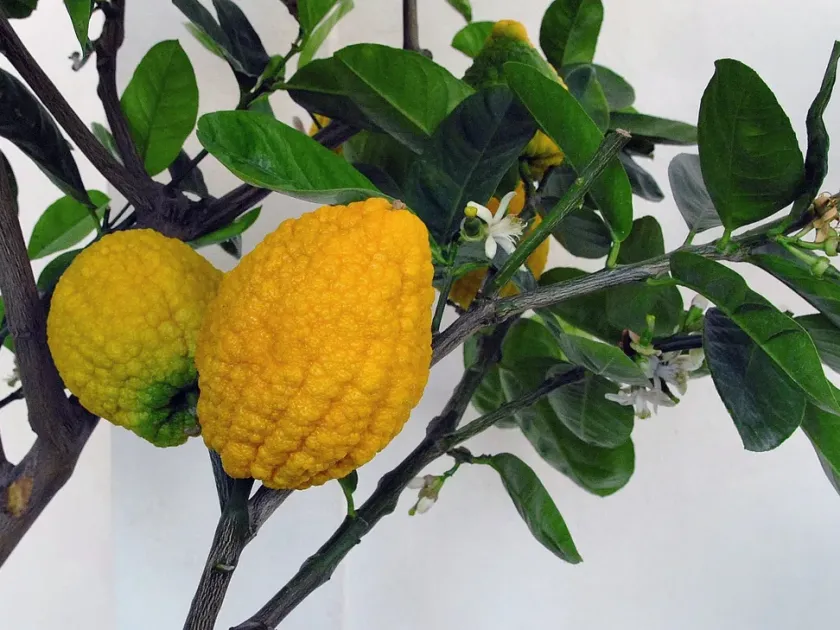
Citron (Citrus medica L.) is an evergreen fruit tree belonging to the Rutaceae family. It is one of the oldest known citrus species, characterized by its large, bumpy, and thick-skinned fruits.
The plant originates from Southeast Asia and eventually spread throughout the Mediterranean and other warm climate regions. Currently, it is cultivated commercially in India, China, the Middle East, Italy, and Greece.
The crop is highly sensitive to low temperatures and requires a sheltered location with abundant sunlight. The optimal temperature range for vigorous growth is between +22 and +28 degrees Celsius.
Citron requires light, well-drained, and fertile soil with a neutral to slightly acidic pH. Waterlogging in the root zone must be avoided at all costs, as it leads to root rot and other fungal pathogens.
In industrial settings, the crop requires regular applications of nitrogen, phosphorus, and potassium fertilizers throughout the growing season to ensure consistent yields.
Yield
Citron fruits are widely used in the food industry, particularly for producing candied peel (succade), preserves, and essential oils. The peel is highly valued for its pectin and aromatic properties.
Main diseases and pests
Common pests affecting citron include spider mites, scale insects, and mealybugs. These pests thrive and multiply rapidly in conditions with low atmospheric humidity.
Citrus diseases include anthracnose, late blight, and various types of root rot, which often occur due to improper irrigation practices and poor soil aeration.
Disease prevention involves regular foliage inspections and sanitation pruning of the crown to ensure good air circulation throughout the tree structure.
Pest management relies on the use of insecticides and acaricides, while biological control methods, such as predatory mites, are often utilized in protected cropping environments.
Routine treatments with copper-based fungicides are recommended to prevent the spread of fungal infections during periods of high humidity and rainfall.
Harvesting
The harvest is carried out selectively as fruits reach their characteristic size and deep yellow color. The fruits can grow to be quite large and heavy depending on the variety.