
Fingered citron
Citrus medica L. var. sarcodactylis (Hoola van Nooten) Swingle
Description
Growing requirements
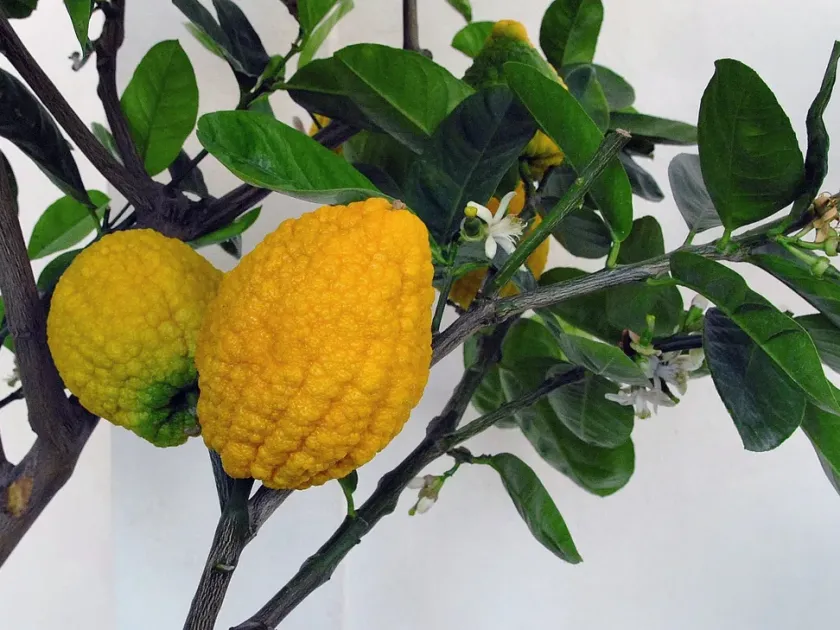
The Fingered Citron (Citrus medica var. sarcodactylis) belongs to the Rutaceae family. It is a slow-growing evergreen shrub or small tree, known for its distinctive, finger-like fruit segments and thorny branches.
Originating from South and East Asia, this plant is highly sensitive to cold. It thrives in tropical and subtropical climates, requiring temperatures between 20°C and 30°C and protection from frost, which can cause irreversible damage.
The plant requires well-draining, nutrient-rich soil with a slightly acidic to neutral pH level. Proper drainage is critical; otherwise, the roots are prone to oxygen deprivation and decay in waterlogged conditions.
Sunlight is essential for the Fingered Citron. It needs bright, indirect light for most of the day, though it can tolerate limited direct sunlight in the morning. Insufficient light levels often result in weak growth and lack of fruit production.
Regular maintenance involves high-potassium fertilizers during the active growing season. Pruning is necessary not only for shaping but also for managing the density of the canopy and promoting better airflow through the branches.
Yield
The fruit is unique because it contains no pulp or juice; it is composed entirely of thick, fragrant rind and a pithy inner structure. The fruit's shape varies significantly, often resembling an open or closed hand.
In culinary applications, the peel is highly prized for its zesty, aromatic oil. It is widely used in making candied fruit, baking, cocktails, and as a natural flavoring agent in traditional Asian cuisine.
Beyond its edible uses, the Fingered Citron is a popular ornamental plant. Because the fruit stays on the branch for a long time, it is frequently used for holiday displays and ceremonial purposes.
The yield is typically modest compared to other citrus varieties. In greenhouse conditions, trees may produce fruit year-round, although harvest peaks usually occur in late autumn or early winter.
Storage of harvested fruit is simple due to the thick rind. They can last for several weeks at cool room temperatures while continuing to fill the room with a pleasant, lemon-like floral fragrance.
Main diseases and pests
Common pests affecting this crop include spider mites, scale insects, and mealybugs. These pests are particularly problematic in dry indoor environments where natural predators are absent.
Fungal issues, such as root rot and leaf spot, are often caused by improper watering practices. These diseases can spread quickly if the environment lacks proper ventilation or if the plant remains overwatered.
Management of pest populations involves the use of horticultural oils, insecticidal soaps, or systemic pesticides. Early detection through regular leaf inspection is the most effective way to prevent major infestations.
Cultural control includes maintaining optimal humidity levels and ensuring the soil surface dries out slightly between waterings. This creates an environment less conducive to fungal spore germination.
Sanitation is key to a healthy plant; always sterilize pruning tools and remove fallen leaves to prevent the buildup of pathogens. Providing adequate spacing between plants also helps to inhibit the spread of common citrus diseases.