
Triteleia
Triteleia hybrids
Description
Sowing dates
Planting Triteleia hybrids bulbs is primarily carried out in the spring once the soil has warmed to 10–12 degrees Celsius. In regions with milder climates, autumn planting is possible, provided the bulbs are protected against freezing temperatures.
The optimal planting depth for the bulbs is between 8 and 10 centimeters, depending on the soil type. In heavy soils, it is recommended to create a sand drainage layer to prevent moisture accumulation around the root system.
When planting in mass, the spacing between bulbs should be at least 10–15 centimeters. This ensures proper air circulation and reduces the risk of fungal diseases during periods of high humidity.
To accelerate germination, some gardeners soak the bulbs in root-stimulating solutions for a few hours before planting. This practice encourages earlier and more uniform emergence of flower stems.
After planting, the soil should be watered carefully to ensure good contact with the bulb. Further irrigation should be moderate until the first leaves appear, after which the frequency can be gradually increased.
Growing requirements
Triteleia hybrids belong to the Asparagaceae family and require sunny, wind-protected locations. The plant prefers well-lit spots, although light shade is acceptable in regions with extremely hot summers.
The soil must be light, rich in organic matter, and have a neutral or slightly acidic reaction. Excellent drainage is critical, as stagnant water leads to rapid bulb rot.
The crop requires regular watering during the active growing season and flowering. During the dormant period, which begins after the leaves dry up, the soil should remain almost dry, mimicking the natural conditions of its habitat.
Triteleia prefers moderate temperature regimes. Most hybrids are not highly winter-hardy and require either lifting of the bulbs or heavy mulching in regions with severe winters.
The plants respond well to complex mineral fertilizers. The first application is performed at the start of leaf development, and the second during the bud formation phase to ensure vibrant and prolonged flowering.
Yield
Triteleia hybrids are highly valued as ornamental plants, widely used in landscape design for rock gardens, borders, and group compositions. Its productivity is mainly measured in the number of flower stalks produced.
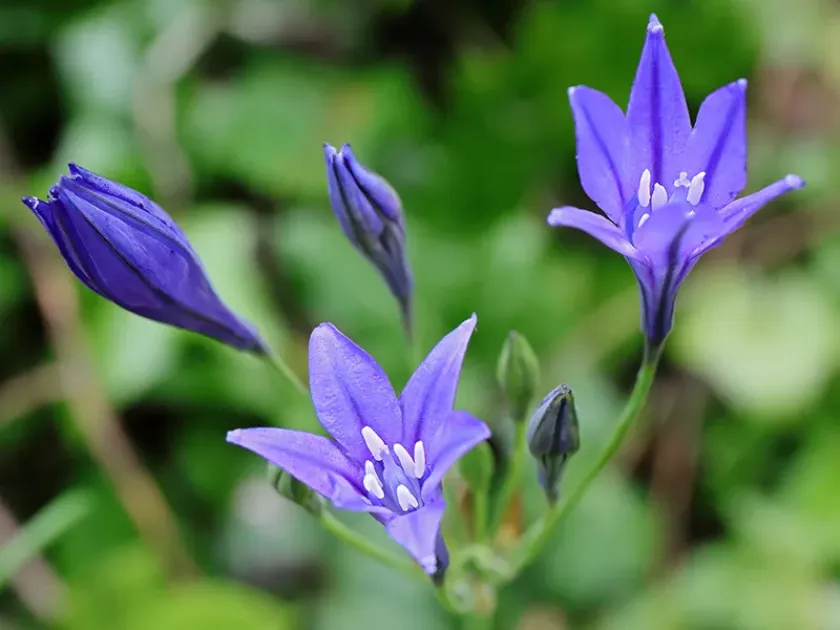
With proper care, each bulb can produce one or several flower stalks ranging from 30 to 60 centimeters in height. At the top of each stem, an umbel-like inflorescence forms, consisting of multiple funnel-shaped flowers.
Commercial use of the crop also includes harvesting for floral arrangements. Triteleia flowers are known for their high vase life, remaining fresh for up to 10–14 days if the water is changed regularly.
Vegetative propagation via daughter bulbs allows for increasing planting density annually. Under favorable conditions, one mature bulb produces 2–3 offsets per season, suitable for future propagation.
The propagation rate depends directly on the level of cultivation techniques, soil quality, and moisture stability. Maintaining optimal conditions guarantees a steady supply of high-quality planting material.
Main diseases and pests
Fungal rots, caused by water imbalance in the soil, pose the greatest threat to Triteleia. Excess moisture promotes the development of Fusarium and gray mold, which leads to bulb mortality.
Among pests, onion flies and thrips are the most common, damaging the aerial parts and bulb tissues. Systemic insecticides are recommended for control during the active growth period.
In open ground conditions, plants may suffer from slug and snail damage. These pests chew the succulent leaves, reducing the ornamental value and weakening the bulb before the dormant season.
Disease prevention includes annual bulb treatment with fungicides before planting and strict crop rotation. It is not recommended to plant the crop in the same location more than once every 3–4 years.
Viral diseases, such as mosaic virus, can also affect Triteleia, causing leaf and flower deformation. Infected specimens must be immediately removed and destroyed, as there is no cure for viral infections.
Harvesting
Bulbs are harvested after the aerial parts of the plant have completely yellowed and dried. This typically occurs in late summer, when the plant enters its natural dormant phase.
Bulbs are carefully lifted with a garden fork to avoid damaging the outer scales. Once removed from the soil, the material is cleaned of dirt and stem residues, then inspected for damage and rot.
Primary drying is carried out in a shaded, well-ventilated area at 20–25 degrees Celsius for one week. This step is essential to heal potential micro-injuries and prevent infections.
For storage, the bulbs are kept in containers with dry sand or vermiculite. The storage environment should maintain a stable temperature of about 15 degrees Celsius and low humidity.
Regular inspection of stored bulbs allows for the early detection and removal of any diseased specimens, ensuring the health of the collection until the next spring planting season.