
Siberian tournefortia
Tournefortia sibirica
Description
Growing requirements
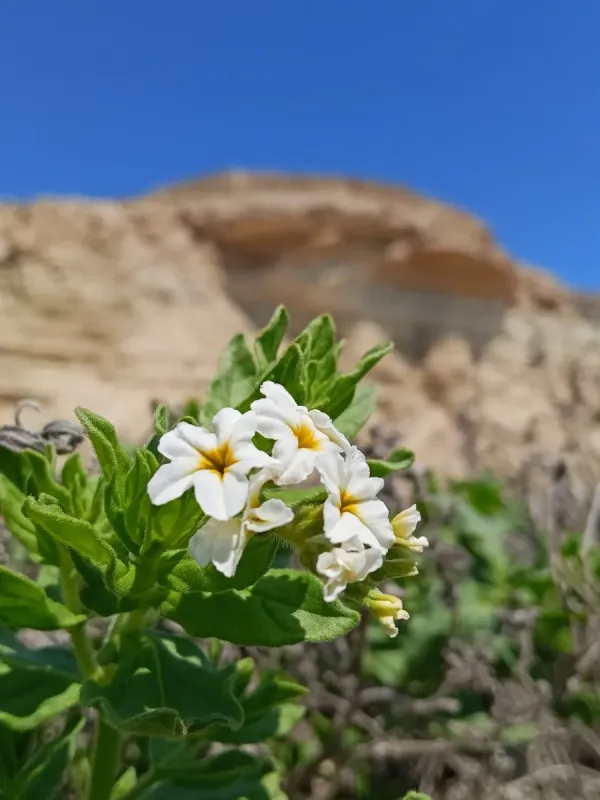
Siberian tournefortia (Tournefortia sibirica) is a perennial herbaceous plant belonging to the Boraginaceae family. It is native to the arid and semi-arid regions of Central Asia, Mongolia, and Southern Siberia, showing remarkable adaptation to harsh environmental conditions.
This species is well-known for its salt tolerance, thriving in saline or sandy soils where other agricultural crops fail to survive. It is often found in desert ecosystems, near saline lakes, and on vast plains with high mineral content in the soil profile.
The plant features a deep root system capable of tapping into groundwater and storing nutrients efficiently. Its foliage is covered with fine hairs, which serves as a physiological mechanism to reduce water loss through transpiration, allowing the plant to withstand intense heat.
Climate-wise, the Siberian tournefortia requires plenty of direct sunlight and can tolerate extreme fluctuations in day and night temperatures. It is highly resistant to drought, making it a valuable subject for research in desert reclamation and land restoration projects.
Regarding cultivation practices, the plant demands minimal human intervention. Key requirements include well-drained soil and the avoidance of waterlogging, which is the most critical factor for maintaining the health of the root system in saline habitats.
Main diseases and pests
The main pests affecting the Siberian tournefortia include native insects adapted to desert flora, such as various species of beetles and larvae that feed on leaves and stems.
Fungal diseases are rare but can occur if the plants are exposed to excessively damp environments, which may trigger root rot and stem decay during the growing season.
Effective management involves maintaining proper spacing between plants to ensure good air circulation, which helps reduce the risk of humidity-related pathogens.
Crop monitoring is recommended, particularly during the early developmental stages, to prevent localized pest outbreaks that could impact the overall growth rate.
Integrated pest management strategies focusing on cultural practices remain the preferred approach, given the plant's natural resilience and limited status as a commercial food crop.