
Tournefortia gnaphalodes
Tournefortia gnaphalodes
Description
Growing requirements
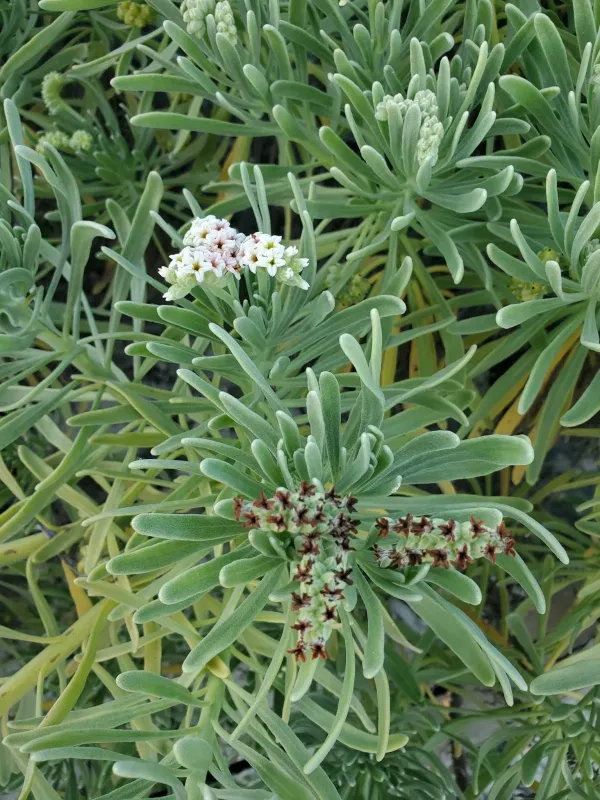
Tournefortia gnaphalodes, commonly known as sea rosemary, is a perennial evergreen shrub belonging to the Boraginaceae family. It is native to the coastal regions of the Caribbean and Florida, specifically thriving in sandy, nutrient-poor soils along beaches.
This species is highly valued for its salt tolerance and ability to withstand harsh winds and intense sunlight. In its natural habitat, it acts as a pioneer species that stabilizes sand dunes and provides a habitat for various coastal fauna.
The plant requires full sun exposure to maintain its characteristic silvery-gray foliage, which is a structural adaptation for water retention. It is strictly a tropical plant and cannot survive in regions with frost or prolonged cold weather.
Agricultural techniques for this plant focus on soil drainage rather than nutrient enrichment. It does not require intensive fertilization, as it is physiologically tuned to survive in saline, sandy conditions that would inhibit the growth of common garden plants.
Botanically, it features small, white, fragrant flowers and densely packed leaves. Its slow growth rate makes it a low-maintenance choice for coastal landscaping projects where erosion control is a priority.
Main diseases and pests
The primary threat to the health of Tournefortia gnaphalodes is root rot caused by stagnant water. Excessive moisture in the root zone must be avoided at all costs, as the plant is not adapted to heavy or clay-like soil environments.
Pests such as aphids and spider mites can occasionally affect the shrub, particularly in artificial or greenhouse settings. Regular inspection of the undersides of the leaves is recommended to prevent large-scale infestations.
Fungal pathogens may develop if the plants are placed too closely together, preventing proper air circulation. Ensuring adequate spacing between shrubs helps to maintain a dry and healthy environment for the foliage.
Soil-borne nematodes can pose a risk to the root system, potentially reducing the plant's vigor. Utilizing sterile planting media or incorporating organic matter can help suppress nematode activity.
Chemical stress from excessive synthetic fertilizers should be avoided. If nutrient supplementation is necessary, slow-release organic fertilizers are the safest option to prevent salt burn and leaf drop.