
Tournefortia scabra
Tournefortia scabra
Description
Growing requirements
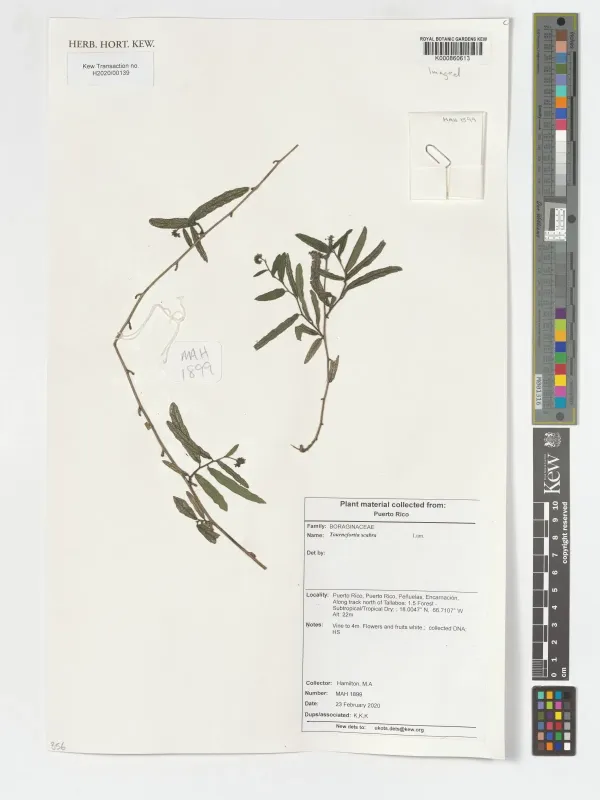
Tournefortia scabra is a member of the Boraginaceae family, distinguished by its unique texture and botanical structure. The plant is named for its rough, scabrous surfaces, which are covered in fine, stiff hairs that serve as a protection mechanism in its native tropical environment.
Originating from the warmer regions of the Americas, this species thrives in climates where temperatures remain consistently mild throughout the year. It has historically adapted to niches in diverse tropical ecosystems, ranging from open clearings to forest edges.
Successful cultivation requires soil that offers excellent drainage to prevent root rot, as the species is highly sensitive to waterlogged conditions. A potting mix rich in organic matter, balanced with perlite or coarse sand, is typically recommended for container-grown specimens.
In terms of light exposure, Tournefortia scabra performs best under bright, indirect sunlight. While it can tolerate partial shade, insufficient light levels often lead to sparse foliage and weak, leggy stems that lack the typical structural integrity of the plant.
Agrotechnical maintenance includes regular pruning to manage the shape and density of the plant. Furthermore, maintaining a humidity level consistent with its tropical origins is beneficial, as the plant can suffer from leaf desiccation if exposed to extremely dry air over prolonged periods.