

Treflan 480
Доу АгроСайенсіс С.А.С., Друзенхайм, Франція
Herbicides
3
2
·
4.1K
3 offers
9.08 €per pack
Buy
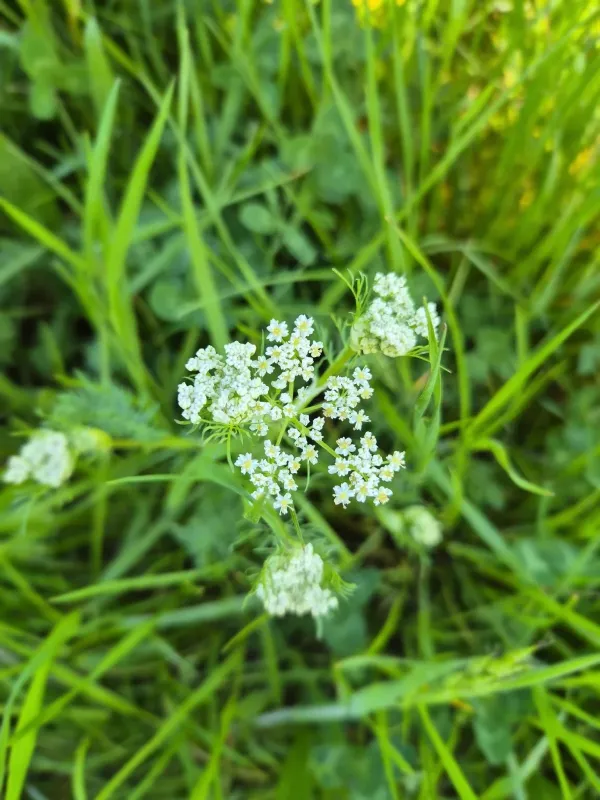
Caraway (Carum carvi L.) is a biennial herbaceous plant belonging to the Apiaceae family. During the first year, it develops a rosette of leaves and a strong taproot, while in the second year, it produces flowering stems, sets seeds, and completes its life cycle.
For large-scale cultivation, sowing is typically performed in early spring as soon as the soil warms up to at least 5–6°C. Winter sowing is also an option in certain regions, allowing for earlier germination due to the natural stratification of seeds in the ground.
Seeds should be planted at a depth of 1.5–2 cm. Proper depth is critical because caraway seeds are small and can easily dry out if placed too shallow, or fail to emerge if buried too deep. The recommended seeding rate is approximately 8–10 kg per hectare.
Row spacing is usually set between 30 and 45 cm to facilitate mechanical cultivation and weed control. Since caraway seedlings emerge slowly and initially grow quite slowly, early weed management is essential to prevent the crop from being choked out.
Ensuring uniform distribution and a target density of 400,000 to 600,000 plants per hectare is vital for achieving a high and stable seed yield at the end of the second growing season.
Caraway is a cold-hardy plant. Its seeds can germinate at temperatures as low as 6–8°C, and the seedlings are capable of withstanding light frosts. However, it requires sufficient moisture, particularly during the germination and flowering stages.
The crop thrives in fertile, well-drained loamy or sandy loam soils with a neutral or slightly acidic pH. It performs poorly in heavy, clay-rich, waterlogged, or highly saline soils, which can lead to root rot and uneven plant development.
Caraway requires full sun for optimal growth and high essential oil content. Shaded environments tend to result in leggy plants, reduced flowering, and a lower concentration of active compounds within the seeds.
Crop rotation is essential for successful caraway production. It should not be planted after other Apiaceae crops, such as carrots, parsley, or dill, to avoid the buildup of soil-borne diseases and specific pests that affect this plant family.
Fertilization programs typically involve incorporating phosphorus and potassium before planting. Nitrogen applications are usually deferred until the spring of the second year to support the rapid growth of the floral stems.
The average yield of caraway seeds typically ranges from 8 to 15 centners per hectare. This figure can vary significantly based on the level of crop management, soil fertility, and weather conditions during the pollination period.
Under optimal conditions and intensive agricultural practices, yields can exceed 20 centners per hectare. A significant factor in success is the management of weeds in the first year, as uncontrolled competition can severely limit the growth of the caraway rosettes.
The concentration of essential oil in caraway seeds generally ranges from 3% to 7%. Market quality depends on seed purity, moisture content, and the absence of extraneous organic material or weed seed contamination.
Lower yields are often observed in poorly established stands or when the crop suffers from excessive competition from weeds. Therefore, maintaining consistent row integrity is a primary goal for the producer.
Consistent production is secured by balanced agronomic care, including timely weeding, strategic fertilizer application, and monitoring the field for early signs of pathogen stress.
Septoria blight is one of the most serious fungal diseases affecting caraway. It manifests as brown spots on leaves and stems, leading to early senescence of the foliage and a significant reduction in the plant's ability to produce mature seeds.
Powdery mildew can be problematic in warm, humid weather, covering plants in a white fungal growth that interferes with photosynthesis and drains the plant's energy reserves during the critical seed-filling phase.
Caraway moths are the primary insect pest, as the larvae feed on the developing buds, flowers, and immature seeds. This activity directly reduces the final seed harvest and can diminish the quality of the remaining produce.
Other pests include aphids and plant bugs, which suck sap from the tender foliage and stems, weakening the plant and increasing its susceptibility to further fungal infections or environmental stress.
Integrated pest management, including fungicide and insecticide applications when necessary, alongside cultural practices like proper spacing and weed removal, is the best strategy to keep these threats under control.
Harvesting takes place in the second year of the plant's life cycle. Timing is critical because caraway seeds are prone to shattering if left on the stalk too long once they have reached full maturity.
Harvesting should begin when the seeds in the central umbels turn brown, indicating physiological maturity. In many climates, this occurs during the mid-to-late summer months.
A two-stage harvesting process is most commonly recommended: mowing the crop and leaving it in swaths to dry for several days, followed by combining the dried material to ensure maximum seed recovery and minimal losses.
Direct combining is generally avoided unless the crop matures very uniformly, as the risk of shattering and moisture-related issues during threshing is too high to justify the potential efficiency gains.
After threshing, seeds must be cleaned to remove chaff and dried to a moisture content of 12–14%. Proper storage in a cool, dry, and dark environment is essential to preserve the volatile essential oils that give caraway its value.


