
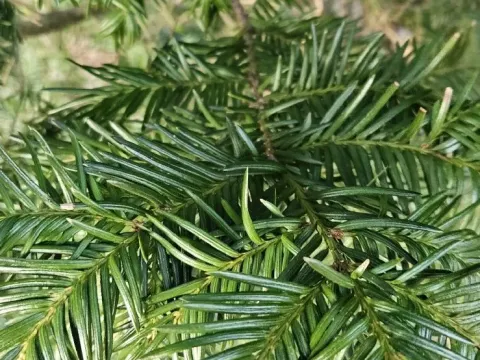
Yew
Taxus L.
Yew (genus Taxus L.) represents a group of evergreen coniferous trees and shrubs belonging to the Taxaceae family. These plants are widely recognized for their slow growth rate, longevity, and dense, dark green foliage that remains attractive throughout the year.
What the section contains


Yew
The crop thrives in fertile, well-drained soils and shows a preference for substrates with a neutral to slightly acidic pH. Avoiding waterlogged soil is critical, as yews are highly susceptible to root rot in poorly drained environments.
Climatically, yews are extremely shade-tolerant and perform best in regions with mild temperatures and high atmospheric humidity. While established plants are hardy, younger specimens benefit from protection against harsh winter winds and strong spring sunlight.
Agronomic maintenance involves regular deep watering during dry spells and the application of balanced NPK fertilizers in early spring to support foliage density. The plant is renowned for its remarkable ability to tolerate heavy pruning and hedging.
It is a biological reality that all parts of the yew, except for the aril surrounding the seed, contain the toxic alkaloid taxine. This necessitates careful planning in plantation management to prevent ingestion by livestock or unauthorized access.
Common pests include the yew scale insect (Parthenolecanium pomeranicum), which can cause stunted growth and yellowing of needles. Horticultural management typically relies on systemic insecticides applied during the crawler stage of the pest.
Phytophthora root rot remains the most significant pathological threat to yew plantations, often triggered by over-irrigation. Proper site drainage and the use of preventative fungicides are essential to maintain the health of the root system.