
Japanese yew
Taxus cuspidata Siebold & Zucc.
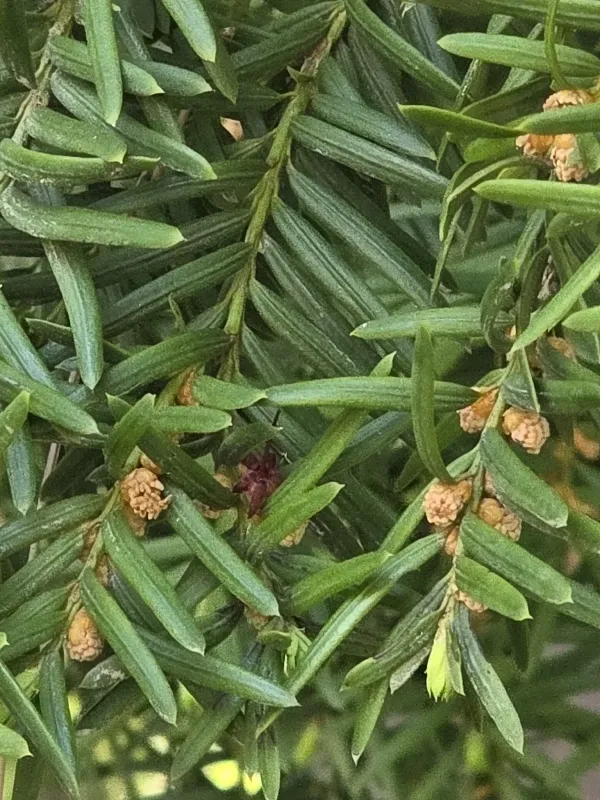
Description
Growing requirements
The Japanese yew (Taxus cuspidata) is a prominent evergreen conifer within the Taxaceae family. It is native to the temperate regions of East Asia, including Japan, Korea, and the Russian Far East, where it typically grows in the understory of mixed forests.
Botanically, it is known for its slow-growing habit and exceptional longevity. The foliage consists of needle-like leaves that are dark green above and paler underneath. The tree produces fleshy, red arils that enclose the single seed, which is a unique characteristic of this genus.
Cultivation requirements involve fertile, well-draining soil with a neutral to slightly alkaline pH. While the Japanese yew is extremely shade-tolerant, it performs best in locations sheltered from harsh winter winds, which can cause foliage desiccation during dormant periods.
Agronomic practices focus on maintaining moisture during the first few years of establishment. Once mature, the plant is relatively drought-tolerant, though supplemental watering during prolonged dry spells ensures a vibrant appearance and better needle density.
In terms of usage, the Japanese yew is highly valued in horticulture for its ability to withstand heavy pruning, making it ideal for hedges, topiary, and architectural garden features. Its dense, dark foliage provides a perfect backdrop for other ornamental plants.
Main diseases and pests
The primary threats to Taxus cuspidata include root rot and Phytophthora infections, which thrive in waterlogged, poorly aerated soils. Symptoms often manifest as chlorosis (yellowing of needles) and dieback of branches.
Pest issues are frequently caused by scale insects, particularly the yew scale. These insects cluster on stems and branches, extracting sap and weakening the plant, while their honeydew secretions encourage the growth of sooty mold.
Effective management includes regular monitoring and the application of horticultural oils or systemic insecticides when pests are in their mobile crawler stage. Pruning and destroying heavily infested branches can help reduce the population density.
Cultural control is vital; maintaining soil health through proper drainage is the most effective way to prevent fungal infections. Avoid overhead irrigation, as damp foliage can promote the spread of fungal spores during humid conditions.
It is important to note that the Japanese yew is toxic to humans and animals if ingested. While this toxicity acts as a natural deterrent against deer browsing and rodent damage, gardeners should always wear gloves when pruning the shrub.