
Orange
Citrus sinensis (L.) Osbeck
Description
Growing requirements
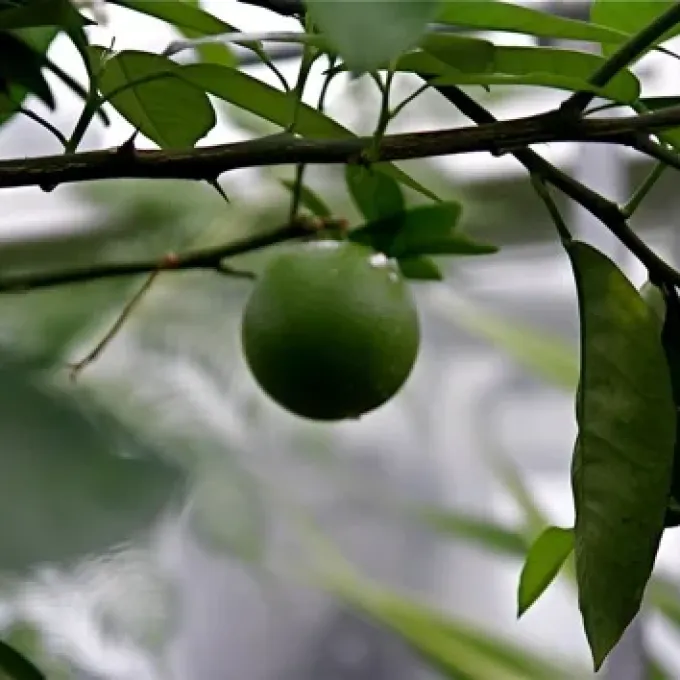
The orange (Citrus sinensis (L.) Osbeck) is a subtropical evergreen fruit tree belonging to the family Rutaceae. It likely originated in a region encompassing Southern China, Northeast India, and Myanmar.
The tree thrives in climates with warm temperatures, typically between 15°C and 30°C. It is sensitive to freezing temperatures, which can cause significant damage to the tree's foliage, wood, and fruit.
Soil requirements for optimal growth include deep, well-drained loamy or sandy-loam soils with a slightly acidic pH between 5.5 and 6.5. Water management is essential, as the roots are susceptible to rot in waterlogged conditions.
Oranges require high solar radiation to produce high-quality fruits with good sugar-to-acid ratios. In commercial orchards, trees are spaced carefully to ensure maximum sunlight penetration throughout the canopy.
Regular fertilization with nitrogen, phosphorus, and potassium is required throughout the growing season. Micronutrients such as zinc, manganese, and boron are often applied via foliar sprays to ensure metabolic health.
Yield
Commercial yields vary significantly depending on the cultivar, the rootstock used, and the density of planting. High-yield orchards can produce upwards of 30 to 50 tons per hectare.
Trees typically reach peak production between 15 and 25 years of age. Modern breeding focuses on high-density orchards to increase efficiency and allow for easier mechanical maintenance.
Oranges are cultivated mainly for fresh consumption, juice processing, and essential oil extraction. The byproduct, dried citrus pulp, is a valuable component of animal feed.
Water-efficient irrigation systems like drip or microsprinkler irrigation are standard in modern citrus cultivation to optimize water usage and delivery of nutrients.
The global production of oranges is a critical sector of the agricultural economy, with major production hubs in Brazil, the United States, and Mediterranean countries.
Main diseases and pests
Key diseases threatening citrus production include Citrus Tristeza Virus, Huanglongbing (HLB or citrus greening), and various fungal pathogens causing root rot and fruit decay.
Pests that commonly plague orange trees include aphids, whiteflies, scale insects, and citrus leaf miners, all of which can drastically reduce tree vigor and fruit quality.
Integrated Pest Management (IPM) is the gold standard for citrus, utilizing natural predators, pheromone traps, and biological controls to minimize the need for chemical intervention.
Quarantine and strict biosecurity protocols are essential to prevent the spread of devastating diseases like HLB, which currently has no known cure and can kill entire orchards.
Proper canopy management, including regular pruning, helps maintain tree vigor and airflow, creating a less hospitable environment for fungal spores and insect pests.
Harvesting
Harvesting is performed manually to ensure fruits are picked without causing damage to the rind, which is crucial for shelf-life, as damaged peel leads to rapid decay.
Oranges do not ripen off the tree, so they must be harvested at the correct stage of maturity based on internal quality standards, such as Brix levels and sugar-acid ratios.
Once picked, fruits are transported to packing houses where they are washed, graded, and sometimes coated with food-grade wax to prevent water loss and improve appearance.
Storage conditions require strict temperature control, usually between 3°C and 8°C, and high relative humidity to maintain firmness and nutritional quality.
Efficiency in logistics is paramount, as the time from harvest to cold storage must be minimized to prevent the development of physiological disorders in the fruit.