
Staehelina fruticosa
Staehelina fruticosa
Description
Growing requirements
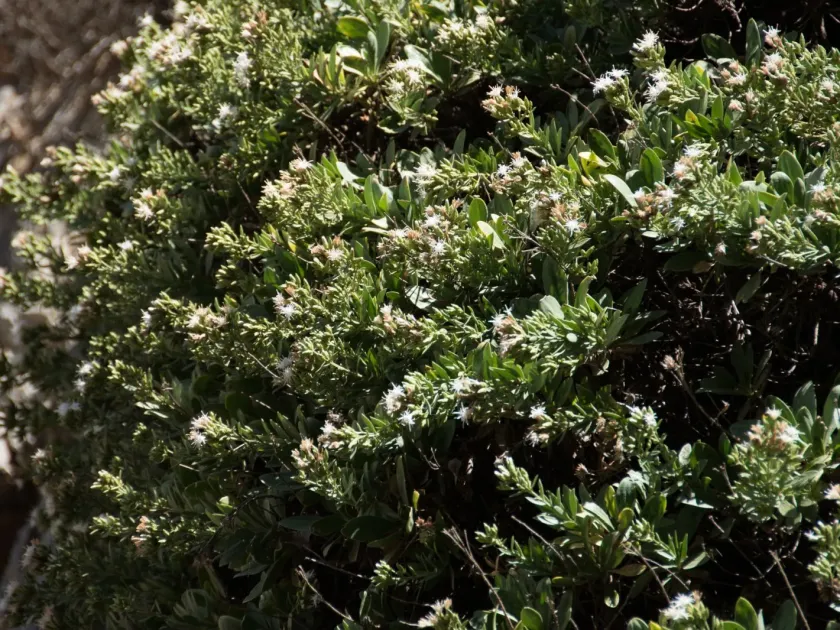
Staehelina fruticosa is a perennial shrub belonging to the Asteraceae family, native to the Mediterranean basin. The plant is characterized by its woody base and leathery, silver-pubescent leaves that provide essential protection against the arid climate of its natural habitat.
Climate requirements for this culture are strictly Mediterranean, requiring full sun exposure and protection from harsh freezing temperatures. Successful cultivation relies on replicating these semi-arid conditions where the plants can thrive with high light intensity and low atmospheric humidity.
Soil conditions are critical for the health of Staehelina fruticosa. It requires well-draining, calcareous, or stony soils. It is highly susceptible to root rot, which occurs rapidly in compacted or waterlogged soils, making soil aeration and drainage the highest priority for the agronomist.
Agronomic management includes limited irrigation, as the plant is adapted to drought. Over-fertilization should be avoided, as it can encourage excessive vegetative growth that is less resilient to seasonal temperature changes and environmental stress.
Propagation is typically achieved via seeds sown in early spring or through cuttings. Providing a sterile, well-draining starting medium is essential to prevent seedling damping-off, which is the most common failure point during the early stages of plant development.
Harvesting
Economically, Staehelina fruticosa is valued for its aromatic properties and potential applications in the pharmaceutical and fragrance industries. The plant contains various secondary metabolites that are extracted during the processing of aerial parts.
Harvesting is performed during the peak flowering stage to ensure the highest yield of essential oils. Mechanical or manual cutting should be precise, ensuring that the woody framework of the plant remains intact to allow for regrowth in subsequent seasons.
Post-harvest management involves immediate drying of the biomass. To prevent degradation of the sensitive volatile compounds, drying must occur in a well-ventilated area shielded from direct sunlight, maintaining a stable and relatively low temperature.
Storage of the dried product requires moisture-proof and airtight packaging to preserve the efficacy and aromatic profile of the material. Proper storage environments are essential for maintaining the quality parameters required for market distribution.
Yield management is dependent on the age and vigor of the plantation. With proper canopy management and protection against pests, this species can maintain productive output for several years, making it a viable crop for specialized aromatic plant producers.