
Chinese Stachyurus
Stachyurus chinensis
Description
Growing requirements
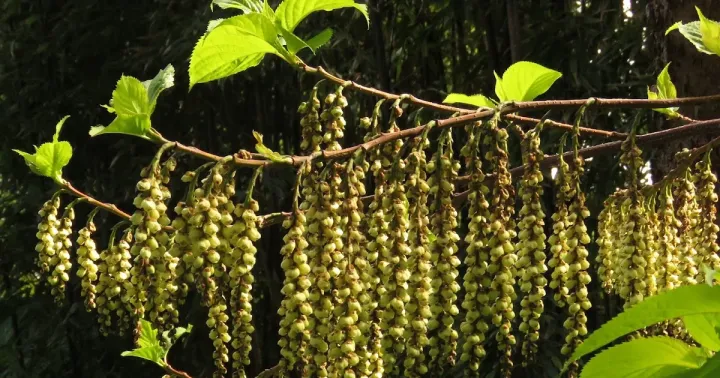
The Chinese Stachyurus (Stachyurus chinensis) is a deciduous shrub belonging to the Stachyuraceae family. Native to the mountain forests of China, it is highly prized for its unique, drooping racemes of bell-shaped flowers that appear in early spring before the foliage emerges.
Botanically, this shrub grows up to 3 to 4 meters in height and features arching reddish-brown branches. The leaves are ovate to lanceolate, with finely serrated margins, providing an elegant, lush appearance during the spring and summer seasons.
Regarding climate requirements, the plant thrives in temperate regions with mild winters. It requires a sheltered position protected from harsh, drying winds. An ideal planting site is in partial shade with well-drained, fertile, humus-rich soil that is slightly acidic.
Standard horticultural practices for this species involve consistent watering, especially during dry spells, to maintain soil moisture without causing waterlogging. Applying a layer of organic mulch around the base helps regulate soil temperature and moisture levels throughout the year.
The main horticultural use of this species is ornamental. It is an excellent choice for woodland gardens, sheltered borders, or as a focal point in a Japanese-style garden where its early flowering habit can be fully appreciated by observers.
Main diseases and pests
Stachyurus chinensis is relatively resistant to pests and diseases when grown in optimal conditions. However, the most significant threat to its health is root rot, which occurs in heavy or waterlogged soils, hindering proper root oxygenation.
Fungal leaf spot diseases can occur during humid and stagnant spring weather. Maintaining proper spacing between plants and pruning for good air circulation within the shrub's canopy is an essential cultural practice for preventing these infections.
Aphids and spider mites are common pests that may occasionally colonize the soft, young growth during hot summer months. Monitoring the undersides of leaves and using insecticidal soaps or neem oil is usually effective in controlling these infestations.
Chlorosis, or yellowing of the foliage, is a common issue when the soil pH is too high. This mineral deficiency can be corrected by amending the soil with sulfur or chelated iron to restore the slightly acidic environment the plant prefers for nutrient uptake.
Finally, winter damage to immature growth is a risk in colder zones. Protecting young plants with frost cloth or providing a sheltered microclimate can prevent dieback and ensure the shrub produces its characteristic flower racemes the following spring.