
Tangerine sandspurry
Spergularia tangerina
Description
Growing requirements
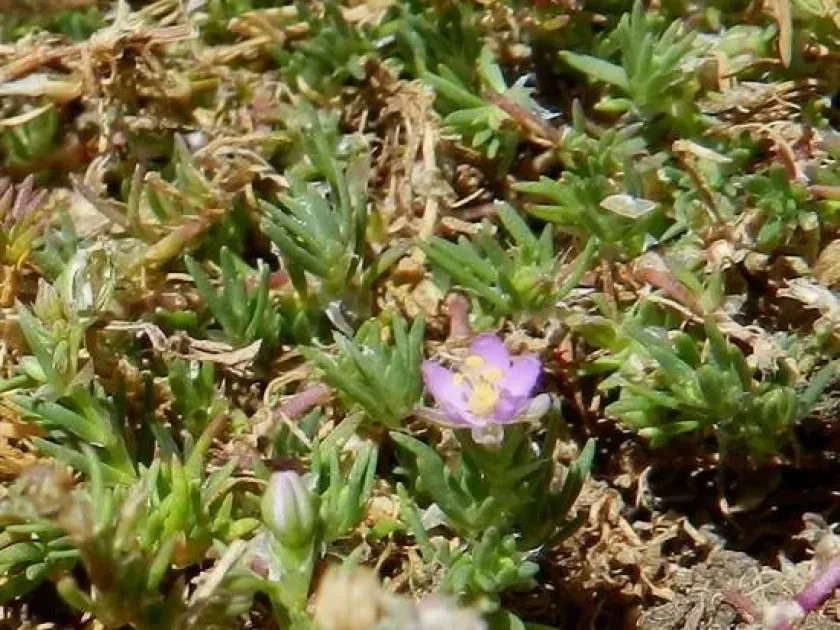
Tangerine sandspurry (Spergularia tangerina) is a herbaceous plant belonging to the Caryophyllaceae family. It is a resilient species often studied for its ability to thrive in challenging environments where typical agricultural crops fail.
The origin of this species is linked to the Mediterranean and North African regions. It is highly adapted to coastal habitats, displaying significant tolerance to soil salinity and sandy substrates which are typically unsuitable for most vegetation.
Botanically, it features slender, succulent-like leaves and delicate flowers. The plant exhibits a xerophytic growth strategy, developing a robust root system that anchors it firmly in loose soils and allows for efficient nutrient uptake.
Regarding climate, the plant requires a warm, sun-exposed environment. It thrives in regions with high solar radiation and low precipitation, making it a potential candidate for semi-arid agriculture where water conservation is prioritized.
Soil management for this culture should focus on permeability. The plant performs best in well-drained, sandy soils that allow for rapid gas exchange in the root zone, preventing the saturation that often leads to plant disease.
Main diseases and pests
Common threats include various fungal root rots, particularly when drainage is insufficient. Careful soil preparation and the selection of well-drained plots are essential to mitigate the risk of pathogen accumulation.
Insect pests such as aphids and larvae can occasionally affect the canopy density. Integrated pest management strategies, focusing on biological controls, are generally recommended to preserve the ecological balance of the cultivated field.