
Spurry
Spergularia echinosperma
Description
Growing requirements
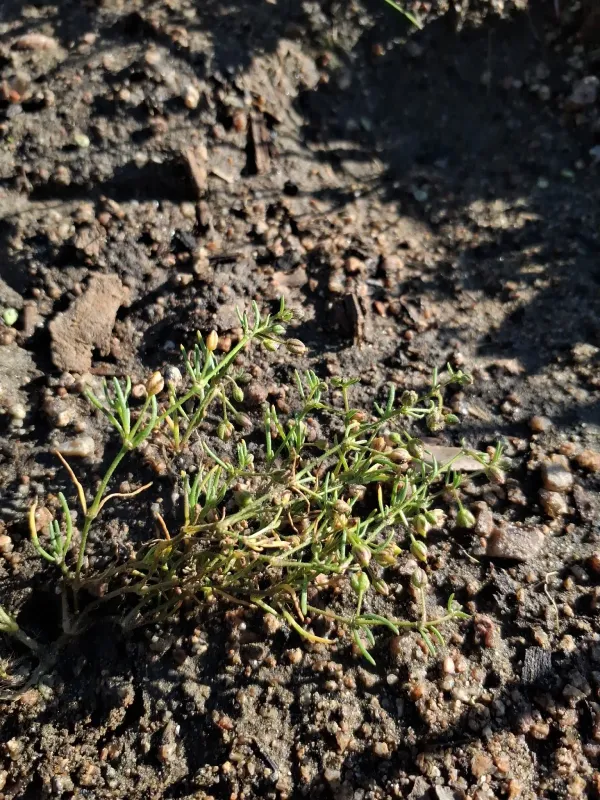
Spergularia echinosperma, commonly known as a type of spurry, belongs to the Caryophyllaceae family. It is an annual herbaceous plant typically found in damp habitats and agricultural fields with sandy soil structures.
The plant demonstrates a strong preference for moisture-retaining, light-textured soils. It is frequently observed in areas with fluctuating water tables, including riparian zones and occasionally waterlogged agricultural plots.
From a botanical perspective, the plant features narrow leaves and small, distinctive flowers. Its seeds are equipped with small spines (hence the specific epithet), which assist in dispersal through soil movement and water runoff.
The species requires high light intensity to thrive and typically shows reduced growth in areas covered by dense crop canopies. It acts as an opportunistic colonizer in disturbed soils or poorly managed agricultural systems.
Soil nutrient levels influence its competitive ability, as the plant can rapidly utilize available nitrogen, often outcompeting slower-growing crop seedlings in the early stages of development.
Main diseases and pests
This species may serve as an alternative host for several soil-borne pathogens that negatively impact cereal and legume production in the same fields.
Invertebrate pests, such as aphids, can utilize the foliage of Spergularia echinosperma to build up populations before migrating to higher-value commercial crops.
Control strategies emphasize the importance of field hygiene, including the thorough cleaning of agricultural machinery to prevent the spread of seeds between different plots.
Post-emergence herbicide applications are generally recommended when the weeds are in the seedling stage, as older plants develop higher levels of chemical resistance.
Regular cultivation and the use of competitive cover crops are highly effective methods to suppress the germination of these weeds within a long-term integrated pest management plan.