
Boccone's sandspurry
Spergularia bocconei
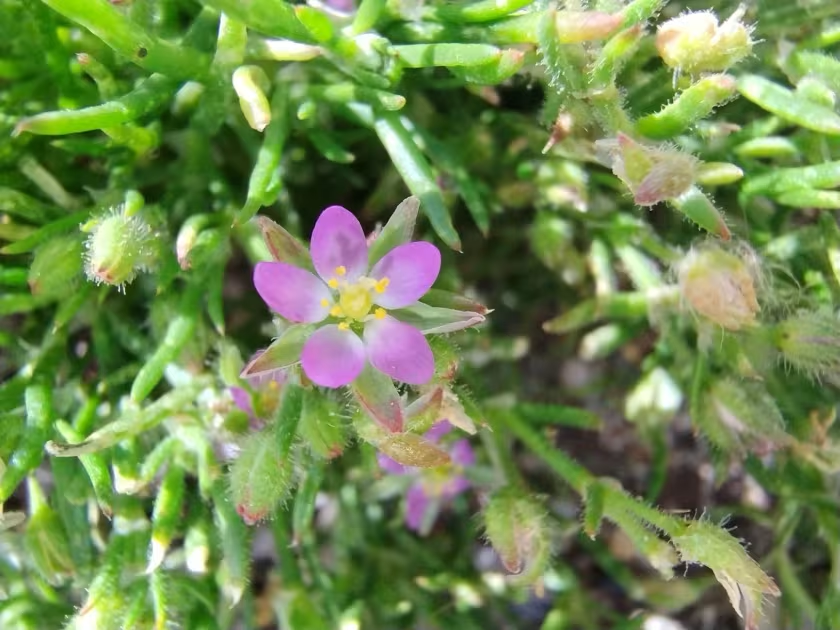
Description
Growing requirements
Boccone's sandspurry (Spergularia bocconei) is an annual herb belonging to the Caryophyllaceae family. It is recognized for its ability to thrive in demanding environmental conditions, often found in Mediterranean-type climates.
The plant exhibits a preference for well-drained, sandy, or gravelly soils. It is particularly valued for its tolerance to soil salinity, making it a viable candidate for land reclamation projects in degraded agricultural areas.
Optimal growth requires full sun exposure and moderate temperatures. The species is adapted to semi-arid environments and maintains growth even when water availability is limited during the vegetative period.
Cultivation practices focus on maintaining soil structure to prevent compaction. As a pasture component, it provides essential cover and is capable of regenerating quickly after grazing by livestock.
Agronomic management includes maintaining adequate spacing to allow for healthy development. While not a primary commercial crop, its ecological role in soil stabilization is significant for sustainable farming systems.
Main diseases and pests
The primary threats to Spergularia bocconei include fungal pathogens such as powdery mildew, which thrive in conditions of high humidity and poor ventilation within the crop canopy.
Insect pests, including aphids and leaf-eating beetles, pose a risk during the early stages of plant development. Monitoring the population density of these insects is crucial for minimizing crop losses.
Root rot represents a physiological disorder caused by waterlogging. To mitigate this risk, it is essential to ensure that agricultural fields have proper drainage systems installed before planting.
Integrated Pest Management (IPM) is recommended to control threats while maintaining ecological balance. This involves using resistant varieties where available and timing interventions to minimize environmental impact.
Crop rotation remains the most effective strategy to break the life cycles of soil-borne pathogens. Integrating this practice ensures long-term productivity and improves overall soil health in the agricultural cycle.